Clinical Coding in Australia: The Complete Guide
Clinical coding translates every Australian hospital admission into standardised codes. This complete guide covers what coders do, where they work, how to train, salary, and how to know if the career fits you.
Post Author:
TalentMed

The Complete Guide
Clinical Coding in Australia: The Complete Guide
Clinical coding translates every hospital admission into standardised alphanumeric codes that Australian hospitals use for funding, research and health statistics. It’s one of healthcare’s most in-demand and remote-friendly careers, and you don’t need a medical background to enter the field.
This guide explains what clinical coding is, what coders do day to day, where they work, how to train, what you’ll earn, and how to know if the career is right for you. It’s written for career changers, healthcare administrators looking to specialise, and anyone exploring an unusual and flexible career pathway.
What is clinical coding?
Clinical coding is the process of translating a patient’s diagnoses, procedures and treatments, written in medical language in their hospital record, into standardised alphanumeric codes. In Australia, coders work across three reference systems: ICD-10-AM for diagnoses and external causes, ACHI for procedures and interventions, and the Australian Coding Standards (ACS) for the rules that govern code selection and sequencing. All three are currently in their Thirteenth Edition 2025, published by IHACPA (the Independent Health and Aged Care Pricing Authority).
In practice those three publications are a five-book system. ICD-10-AM and ACHI are each split into an alphabetic index and a tabular list, and Australian coders learn to recognise them by their cover colours: yellow for the ICD-10-AM index, red for the ICD-10-AM tabular list, green for the ACHI index, blue for the ACHI tabular list, and purple for the Australian Coding Standards. We use those colours throughout this guide so you recognise the books when you see them in the wild.
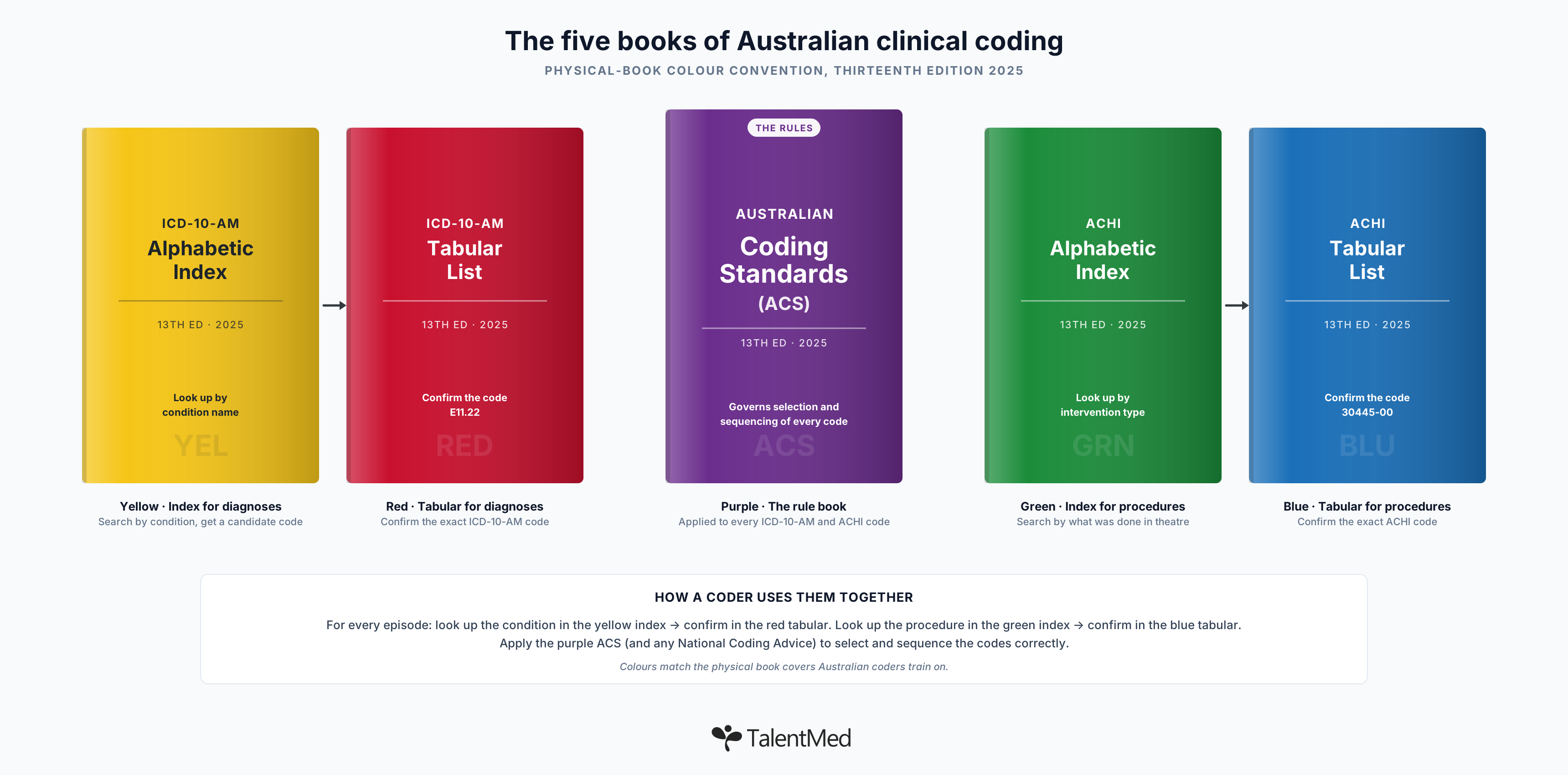
Coded data drives hospital funding through the AR-DRG classification, feeds national health statistics, underpins medical research and health service planning, and supports performance benchmarking and safety-and-quality monitoring. If you want a deeper explainer, read What is clinical coding? and ICD-10-AM explained.
The professional body for coders in Australia is the Clinical Coder’s Society of Australia (CCSA). Membership isn’t compulsory, but it signals ongoing commitment to the field and gives access to professional development and networking. For more on this, see Do clinical coders need to be a member of a professional association?
How ICD-10-AM and ACHI fit together
For every episode, a coder uses ICD-10-AM to record why the patient was in hospital and ACHI to record what was done. The two classifications answer different questions and use different code formats, but they always appear together on a coded episode. A side-by-side look:
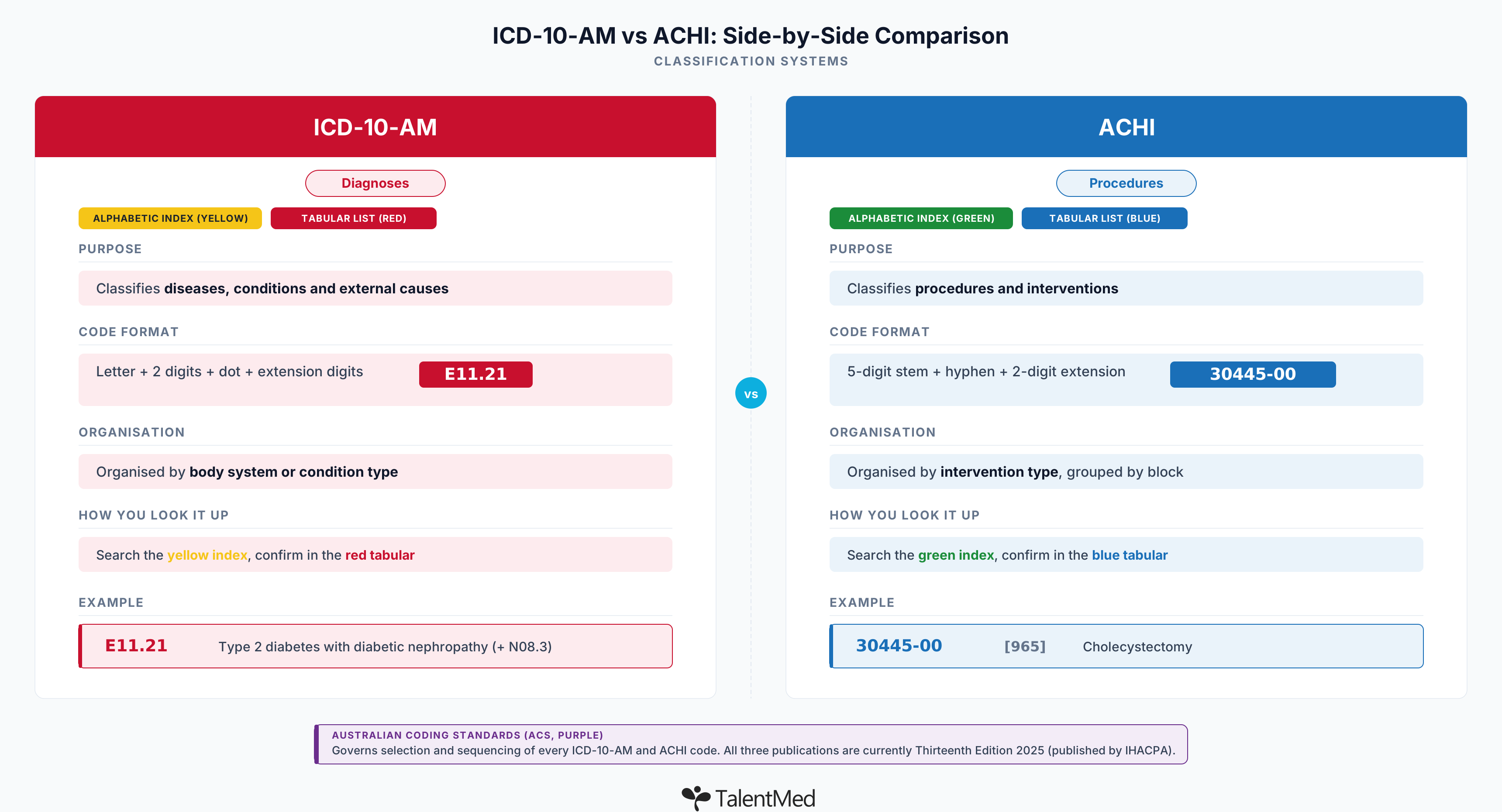
Every code a coder assigns is governed by the Australian Coding Standards (ACS). The ACS tells coders which diagnosis is the principal diagnosis (ACS 0001), which additional diagnoses are clinically significant enough to code (ACS 0002), and how to sequence the codes so that hospital funding is calculated correctly. Both ACS and the current National Coding Advice (NCA) are mandatory; NCA provides binding interim guidance between ACS editions and is published by IHACPA when a standard needs clarification.
Advanced concepts every working coder learns
The index-then-tabular discipline and ACS 0001/0002 get a new coder through their first week. The concepts below are what separate a confident working coder from a beginner, and they’re all taught and assessed in the HLT50321 Diploma.
What does a clinical coder do day to day?
A clinical coder reads the full record of a hospital admission after discharge and assigns the ICD-10-AM, ACHI and ACS codes that describe what happened. The work is quiet, detail-heavy, and entirely screen-based in a modern Australian hospital.
Every admission generates a documentation trail, and the coder’s job is to read it carefully, identify the principal diagnosis (the condition chiefly responsible for the episode, per ACS 0001), every clinically significant additional diagnosis (per ACS 0002), and every codeable procedure, and apply the ACS to assign and sequence the correct codes.
Reading the whole trail in one sitting also makes the coder the person most likely to notice a contradiction in the documentation itself, which matters more now that a growing share of it is drafted by AI before a human sees it. We cover what that checking involves in why healthcare documentation still needs a human in the loop.
A typical workflow looks like this:
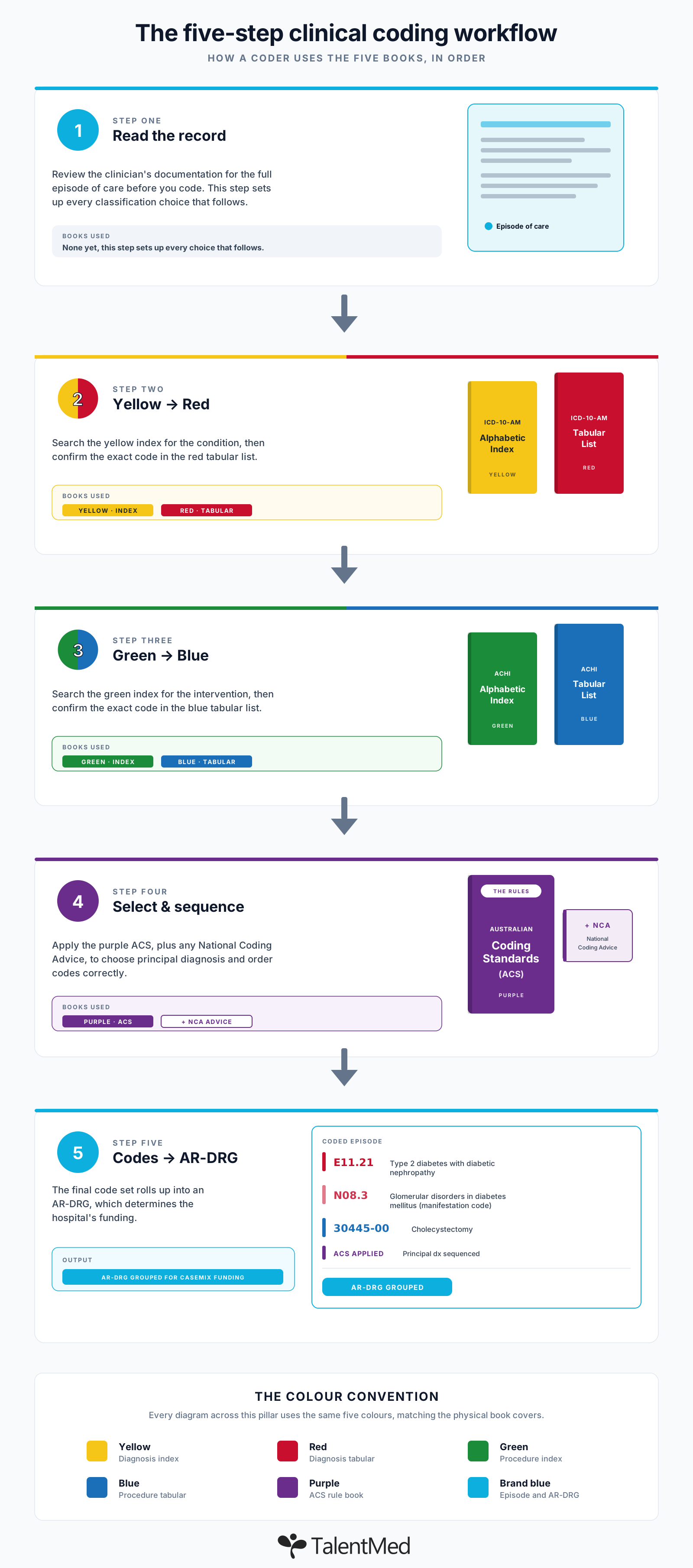
Coders use reference codebooks, software such as 3M Codefinder or Turbocoder, and episode management systems that sit inside hospital medical records. For a comparison of digital and physical reference tools, read Clinical coding resources compared.
“A lot of people don’t know this career exists. When they hear about it, the common response is: that sounds like the job for me, actually.“
Where do clinical coders work?
Clinical coders work in public hospitals, private hospital groups, third-party coding service providers, and a growing share of it from home. It’s one of the most remote-friendly roles in healthcare. The four broad settings:
Qualified coders also work in day-surgery centres, private health insurers (for audit roles), state and territory health departments, and at IHACPA on classification development itself. Once you build experience, a credentialling pathway through the Clinical Coder’s Society of Australia (CCSA) opens further roles in auditing and education.
For a closer look at the remote-work angle, read From hospital to home office, and for a broader jobs market view see A guide to clinical coding jobs in Australia.
How do I become a clinical coder?
To become a clinical coder in Australia, complete a nationally recognised Diploma such as our HLT50321 Diploma of Clinical Coding, then apply for entry-level coder roles. The full pathway takes about 12 months of self-paced online study.
There is one primary pathway into clinical coding in Australia: a nationally recognised Diploma. You don’t need a medical background, a university degree or prior healthcare experience. What you need is attention to detail, comfort with technical rules, and the willingness to learn a new language of medicine.
- 1Enrol in HLT50321. Daily intakes run 365 days a year, so you can start whenever suits you.
- 2Study 100% online over about 12 months, around 15 hours a week, self-paced, with support from trainers.
- 3Apply for entry-level coder roles in public hospitals, private hospital operators or coding service providers.
- 4Build speed on the job. Most coders reach independent-coder productivity within 12 months of their first hire.
For a step-by-step deep dive, read How to become a clinical coder in Australia (2026 guide). For tips on choosing the right course, see What to look for in a clinical coding course.
Train with Australia’s best-value Diploma of Clinical Coding
The HLT50321 Diploma of Clinical Coding is TalentMed’s flagship qualification and the one Australian hospitals consistently ask for when shortlisting entry-level coders. It’s 100% online, takes about 12 months, and is priced as Australia’s best-value Diploma of Clinical Coding.
What do clinical coders earn in Australia?
Clinical coders in Australia earn from around $87,000 at entry level up to $158,000 for managers, with experienced coders sitting in the $101,000 to $142,000 band (Queensland Health, Certified Agreement No. 12 / EB12, effective 1 September 2025).
Salaries have risen substantially under current enterprise agreements. Queensland Health’s public-hospital coders now earn from around $87,000 at entry level (L1) up to $158,000 for managers and statewide leads at the top of the scale (L5.4), per the Queensland Public Health Sector Certified Agreement (No. 12) 2025 (EB12), with rates effective 1 September 2025. These award-backed figures are the most authoritative public-sector benchmark for the profession. Pay varies by state, sector (public vs private), and whether the role is onsite or remote.
| Classification | Typical annual salary (AUD) |
|---|---|
| Entry-level clinical coder (L1) | $87,000 to $96,000 |
| Experienced clinical coder (L2) | $101,000 to $111,000 |
| Senior coder, auditor or educator (L3 to L4) | $117,000 to $142,000 |
| Manager or statewide lead (L5) | $148,000 to $158,000 |
For current market data and recent listings, search Seek and CareerOne. For a detailed salary breakdown, read Clinical coder salary in Australia: what to expect in 2026.
Is clinical coding the right career for you?
Clinical coding suits a particular kind of thinker. The following signs suggest you’d thrive in the role:
For a more detailed self-check, read Is clinical coding right for you? 5 signs you’d thrive, and for where the jobs are, see the complete guide to clinical coding jobs in Australia.
Related reading
Start here
Latest from the blog




Frequently asked questions
Want to find out more?
Speak to a TalentMed course adviser about HLT50321.
12 months, 100% online, flexible payment plans, daily intakes year-round.