Allied Health Practice Management in Australia | TalentMed
Post Author:
TalentMed
Allied Health Practice Management
Allied Health Practice Management in Australia
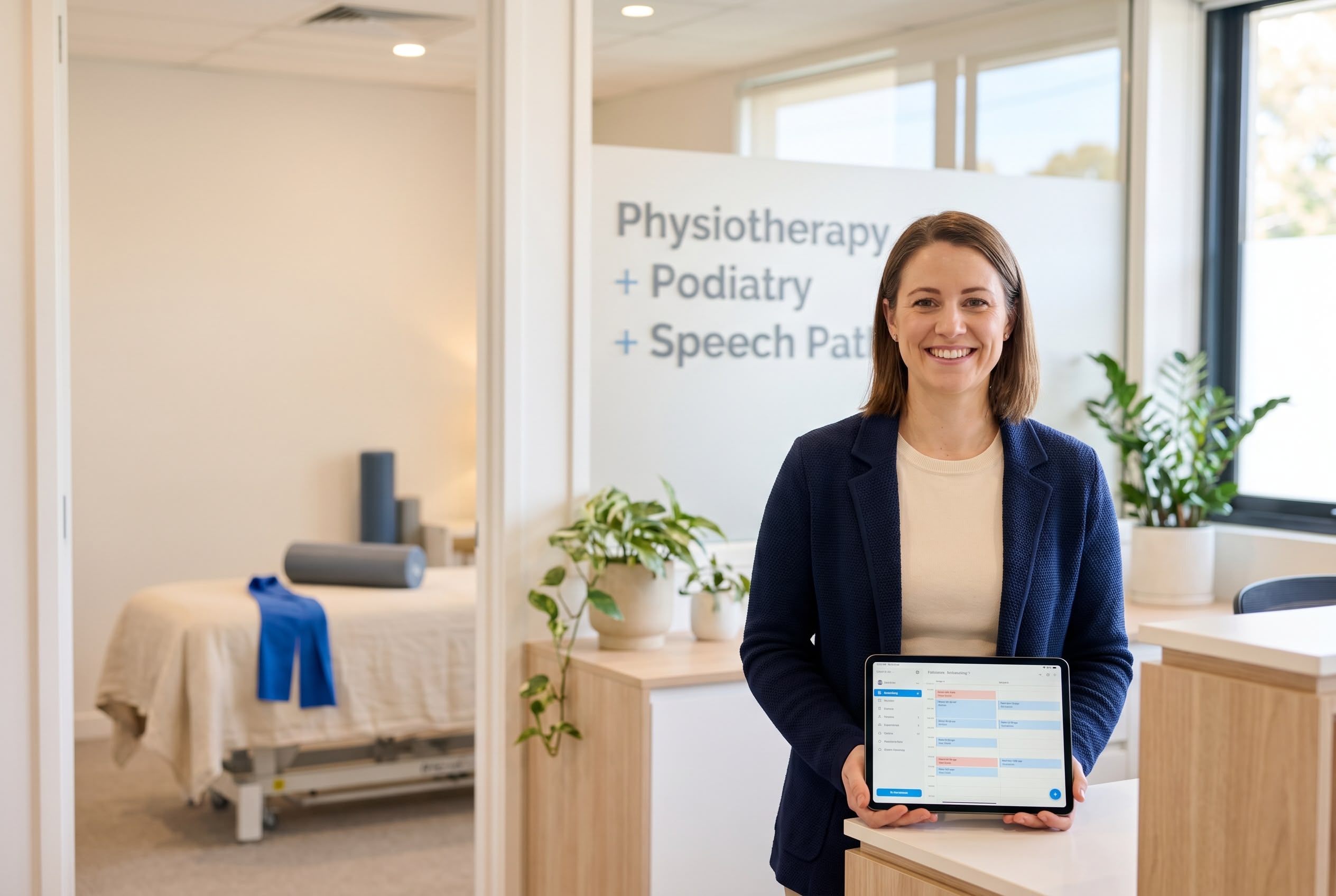
Allied health practice management is the operational, financial, governance and HR running of a clinic delivering allied health services such as physiotherapy, podiatry, occupational therapy, speech pathology, dietetics, exercise physiology or psychology. The role overlaps with medical and dental practice management on the management fundamentals, but the funding mosaic, AHPRA registration context, peak-body landscape and team mix are different enough to need their own playbook. This guide walks through what allied health practice managers actually do, how the role differs from medical and dental, the AHPRA Boards and peak bodies that shape the regulatory frame, the funding stream complexity (Medicare CDM, NDIS, private health rebates, DVA), the software you will likely meet, salary expectations and the training pathway via HLT57715.
TalentMed Pty Ltd (RTO 22151) delivers the HLT57715 Diploma of Practice Management as a generic-purpose qualification across health practice settings. Allied health is a strong fit. The diploma covers governance, finance, HR, accreditation and operational competencies that any practice manager needs, then your discipline-specific knowledge (NDIS provider obligations, Medicare CDM/EPC referral rules, professional registration nuances by Board) layers on through workplace exposure and short-course CPD.
What allied health practice management actually involves
An allied health practice manager owns the operational, financial and compliance running of a multi-disciplinary or single-discipline allied health clinic, so practitioners can focus on client care. The role looks like a medical or dental practice manager role on the surface, but in most allied health settings the practice is smaller, the funding mix is more complex, and the manager wears more hats simultaneously than in a comparable medical or dental clinic.
The day-to-day mix typically covers:
The proportions shift with practice shape. A solo physiotherapy or psychology practice may need a working manager who runs reception while overseeing operations. A multi-disciplinary clinic with physiotherapy, podiatry, exercise physiology and dietetics under one roof typically has a dedicated practice manager focused on operations, finance and the funding-stream complexity. Larger group practices and corporate groups (Healthia, Unison Health Group, large NDIS providers) usually have layered management, with a senior manager focused on strategy and individual site managers focused on day-to-day delivery.
How allied health PM differs from medical and dental PM
The core management competencies overlap completely; the regulatory framework, funding mosaic, software ecosystem and team structure are the points of difference. If you have managed a GP practice or a dental clinic and are considering a move into allied health, your skill set transfers; what you absorb in the first three months is the funding-stream complexity and the multi-Board AHPRA landscape.
The table below summarises the practical differences a working manager will notice early.
| Area | Medical (GP / specialist) | Dental | Allied health |
|---|---|---|---|
| Primary regulator | Medical Board of Australia (AHPRA), RACGP Standards | Dental Board of Australia (AHPRA), ADA-published infection control | Discipline-specific Boards under AHPRA where applicable, plus self-regulated peak bodies |
| Billing model | MBS bulk-billed or mixed-billed, ECLIPSE for in-hospital | ADA item numbers, HICAPS, CDBS, DVA, fee-for-service | Medicare CDM/EPC items, NDIS, HICAPS private rebates, DVA, workers comp, fee-for-service |
| Funding stream complexity | Lower; one dominant funder (Medicare) with a clear schedule | Lower; private health funds and patient out-of-pocket dominate | Higher; clinics often juggle 4 to 6 active funding streams simultaneously |
| Practice software | Best Practice, Medical Director, Genie, Zedmed | Praktika, Dental4Windows, Exact, Core Practice | Cliniko, Nookal, Halaxy, Splose, PracSuite, Power Diary |
| Team composition | GPs, practice nurses, allied health, reception | Dentists, dental assistants, hygienists, OHTs, treatment coordinators | Multi-discipline practitioners (physio, podiatry, OT, speech, dietitian, psychology, EP) plus AHAs and reception |
| Practice size profile | Mid to large; 5+ FTE common in suburban practice | Small to mid; 3 to 6 chairs typical for an independent | Often small; 2 to 6 practitioners typical, many practitioners on contractor or part-time arrangements |
| Compliance focus | Accreditation cycle (RACGP / QPA / Avant) | Sterilisation room and infection control | NDIS Practice Standards (where registered), worker screening, plan-management compliance |
The headline difference is the funding mosaic. Allied health practice managers spend a meaningful share of their week navigating four to six active funding streams in parallel: a single client may move between Medicare CDM (5 sessions per calendar year), private health rebates, NDIS plan-managed funding, DVA, and self-funded over the course of a year. Tracking that, billing it correctly, and extracting clean reporting on it is materially more involved than a medical or dental billing workflow.
AHPRA Boards, peak bodies and registration context
Allied health is not one regulatory frame; it is a patchwork. Some allied health professions are AHPRA-regulated through their own National Board (physiotherapy, podiatry, occupational therapy, psychology, Chinese medicine, optometry and several others). Other professions are self-regulated by their peak body (speech pathology, dietetics, exercise physiology, social work, audiology). As a practice manager you verify the right thing for the right profession, and keep current with the renewal and CPD cycles each governance route applies.
If your clinic delivers more than one allied health discipline, hold a single registration log that captures AHPRA registration numbers and renewal dates for AHPRA-regulated practitioners alongside peak body certification numbers and renewal dates for self-regulated practitioners. Audit it quarterly. AHPRA registration lapses are an absolute blocker on Medicare CDM and most private health rebate eligibility, and a peak body certification lapse can affect insurer recognition and NDIS registration status.
NDIS, Medicare and private rebates: the funding mosaic
The funding mosaic is the most distinctive operational feature of allied health practice management. Where a GP practice runs predominantly on Medicare and a dental clinic runs predominantly on private health funds and patient out-of-pocket, an allied health clinic typically blends four or more active funding streams across the same client base. Knowing how each works, what each pays, and how to bill cleanly across all of them is core to the role.
The practice manager’s job is not to memorise every fee schedule across every funding stream. It is to set up systems that route each appointment to the correct billing pathway, capture the right evidence (referral validity, plan number, NDIS goal alignment), and reconcile the income each week against expected revenue. Modern allied health software (Cliniko, Halaxy, Nookal, Splose) is built for this kind of multi-stream complexity, and the right software choice plus disciplined client onboarding workflow makes the funding mosaic manageable rather than chaotic.
Software in allied health practices
Australian allied health practices run on a small set of dominant cloud-native practice management platforms, each with strengths around appointments, online booking, multi-funder billing and clinical notes. Knowing the major players and their billing model is part of the allied health practice manager skill set, particularly during a vendor evaluation or a multi-site rollout.
| Software | Strengths | Common context |
|---|---|---|
| Cliniko | Cloud-native, clean UI, strong online booking, broad allied health coverage, monthly subscription | Solo and group practices across physiotherapy, podiatry, OT, speech, dietetics, EP, psychology |
| Nookal | Australian-built, deep clinical notes and reporting, strong NDIS workflow, on-site or cloud | Mid-sized to large multi-disciplinary clinics, particularly in regional centres and NDIS-heavy practices |
| Halaxy | Practitioner-friendly, integrated payments, free entry tier, good for solo practitioners and small groups | Solo practitioners, small clinics, and practitioners running side-of-desk private practice |
| Splose | NDIS-first design, plan tracking, strong invoicing for plan-managed and self-managed clients | NDIS-focused providers, particularly OT, speech and EP delivering high-volume NDIS services |
| PracSuite (formerly Front Desk) | Long-established Australian platform, strong reporting, mature billing | Established mid-sized clinics with long-tenured staff and complex billing |
| Power Diary | Cloud-native, good UX, integrated telehealth, broad allied health coverage | Solo and small group practices, particularly mental health and psychology |
HICAPS terminals integrate with most of these platforms for on-the-spot health-fund claiming. Online booking integrations (HealthEngine, HotDoc, native software booking) sit on top of the platform and need configuration around practitioner availability, appointment-type duration, and the right intake forms for each funding stream. NDIS-heavy practices typically need plan tracking, line-item invoicing and evidence-of-service capture built into the workflow, which is where Splose and Nookal differentiate.
For a practice manager moving in from medical or dental, expect a learning curve of two to three months on the specific platform, plus ongoing immersion in allied-health-specific reporting (utilisation, average billed minutes per session, no-show rates by funding stream, NDIS plan burn rate, client lifetime value). Most vendors run formal training and have active user communities you can lean on.
Salary and progression
Allied health practice manager salaries in Australia generally sit in a similar band to medical and dental practice manager salaries, with senior multi-site or NDIS-heavy roles in capital-city group practices often pushing the upper end of the range. The variability is wider than in medical or dental, because allied health practice sizes range from solo physiotherapy clinics through to large multi-disciplinary group practices and corporate NDIS providers.
A working guide based on AU job market patterns:
Treat the bands as indicative; offers vary by city, practice size, hours, NDIS exposure, and whether the role includes clinical-leadership or pure operations responsibilities. The salary article on our pillar covers cross-discipline benchmarking; see practice manager salary in Australia for the broader picture.
Career progression typically follows one of three arcs: the operations track (practice manager to multi-site to operations manager to consultant), the ownership track (practice manager to part-owner to principal, often via clinical-spouse or business-partner pathways), or the NDIS track (allied health manager to NDIS provider operations to compliance or quality lead in a registered provider). The NDIS track has grown materially since 2020 and is now a recognised specialisation in its own right.
Training pathway: HLT57715 plus allied health experience
The HLT57715 Diploma of Practice Management is a generic-purpose qualification that covers the operational, financial, governance and HR competencies any practice manager needs, then your allied-health-specific knowledge layers on top through workplace exposure and short-course CPD. The diploma is not allied-health-exclusive, but it is allied-health-applicable, and pairing it with documented allied health experience produces a credible employer-ready profile.
The standard pathway most successful Australian allied health practice managers follow:
HLT57715 at TalentMed is delivered fully online and self-paced over 12 months (with possible completion in 6 months for motivated students), with daily intakes 365 days a year. The diploma is VSL-approved for tuition, so eligible Australian citizens and approved visa holders can use a VET Student Loan to cover course tuition. ZipMoney, a 3-instalment plan, employer-funded study and upfront payment are also available; current pricing is on the course page.
Some experienced allied health practice managers will benefit from Recognition of Prior Learning (RPL) for HLT57715 rather than full enrolment. RPL is an assessment process rather than an automatic credit, and is best suited to working practice managers with documented evidence of competency across most diploma units. Read the RPL spoke for the criteria, fees and process.
The HLT57715 Diploma of Practice Management at TalentMed
The HLT57715 Diploma of Practice Management is TalentMed’s flagship practice management qualification. Whether you study with a medical, dental, allied health or specialist practice in mind, the diploma you receive is the same nationally recognised AQF Level 5 credential.
Related reading
Keep exploring
Frequently asked questions
TalentMed Pty Ltd, RTO 22151. HLT57715 Diploma of Practice Management is a nationally recognised AQF Level 5 qualification, delivered fully online. Salary figures are indicative based on AU job market patterns; actual offers vary by location, practice size and role scope. Verify all regulatory information against current AHPRA, Board and peak body publications. Confirm course details at training.gov.au.

Want to find out more?
Enter your details below to receive a free information pack instantly.