About TalentMed

This author has not yet filled in any details.
So far TalentMed has created 25 blog entries.

The Rise of the Healthcare Quality Auditor: Your Essential Role in Australian Care

In Australia, our healthcare system is a cornerstone of our society, constantly evolving to meet the needs of a growing population. Yet, behind the dedicated doctors, nurses, and allied health professionals, tQuieter but equally critical force ensuring everything runs smoothly, safely, and effectively: the healthcare quality auditor.

If you’re looking for a career that combines your passion for healthcare with a meticulous eye for detail, and one that offers immense job security and impact, then you’re about to discover Australia’s most urgent professional need. From bustling metropolitan hospitals to vital aged care facilities and community health services, the demand for skilled quality auditors is reaching unprecedented levels.

In this comprehensive guide, we’ll unpack the powerful “demand equation” driving this urgent need, exploring how increasing regulation, non-negotiable patient safety mandates, and complex funding models have made healthcare quality auditors the new essential professionals.

Australia’s Regulatory Tsunami: Why Compliance is No Longer Optional

The Australian healthcare sector operates under a more stringent regulatory environment. Recent years have seen a surge in Royal Commissions, inquiries, and heightened public scrutiny, particularly in sensitive areas like aged care, child care and disability services. These investigations have shone a harsh light on systemic issues, leading to widespread reforms and a non-negotiable demand for accountability.

The Impact of Royal Commissions and National Standards:

These regulatory bodies and standards aren’t just guidelines; they carry significant legal, financial, and reputational consequences for non-compliant organisations. For healthcare providers, effective quality auditing is no longer a luxury; it’s a fundamental operational necessity to avoid penalties, maintain accreditation, and, most importantly, provide safe care.

Beyond the Checklist: Driving Uncompromising Patient Safety and clinical governance

At the heart of every healthcare service is the patient. Ensuring their safety, dignity, and optimal outcomes is the paramount goal. However, in complex clinical environments, risks abound. Quality auditors play a crucial role in building and maintaining robust patient safety systems and effective clinical governance frameworks.

From Reactive to Proactive Safety:

The Backbone of Clinical Governance:

Without skilled quality auditors, organisations struggle to maintain vigilance, leading to potential lapses in patient safety, reputational damage, and, most tragically, preventable harm. Their work ensures that healthcare providers are not just meeting standards, but constantly striving for excellence.

The Financial Equation: How Quality Audits Safeguard Funding and Optimise Performance

In Australia’s complex healthcare landscape, funding is intrinsically linked to quality and compliance.

The efficient and accurate delivery of healthcare services relies heavily on robust internal processes, which quality auditors are uniquely positioned to assess and improve. Their work directly impacts an organisation’s financial viability and operational efficiency.

Protecting Revenue Streams:

Driving Efficiency and Reducing Waste:

In an environment where every dollar counts, a skilled quality auditor is an invaluable asset, not only ensuring compliance but actively contributing to the financial health and sustainability of healthcare organisations.

More Than Just Compliance: The Evolving Landscape for Healthcare Quality Auditors

The role of the healthcare quality auditor is evolving rapidly, extending far beyond traditional compliance checks. Auditors are more and more, becoming strategic partners in innovation, risk management, and continuous improvement across the diverse healthcare ecosystem.

Emerging Areas of Audit Focus:

Strategic Value Proposition:

This expanded scope means the demand for auditors with diverse skills – from clinical knowledge to IT literacy and analytical prowess – is only set to grow. They are instrumental in helping organisations adapt to new technologies, evolving patient expectations, and dynamic service delivery models.

Become a Silent Architect of Safety: Your Path with TalentMed’s Diploma of Quality Auditing

The urgent and growing need for healthcare quality auditors presents an unparalleled career opportunity in Australia. If you want a step-by-step overview of the qualification pathway, read How to Become a Healthcare Quality Auditor in Australia. If you possess a keen eye for detail, a commitment to excellence, and a desire to make a tangible difference in patient care, this could be your next strategic career move.

TalentMed’s nationally recognised Diploma of Quality Auditing is specifically designed to equip you with the specialised skills and knowledge required to excel in this in-demand field. Our comprehensive program focuses on the unique context of Australian healthcare, ensuring you’re job-ready from day one.

Why Choose TalentMed for Your Quality Auditing Journey?

The increasing complexity, heightened accountability, and unrelenting focus on patient safety mean that the demand for skilled healthcare quality auditors will only continue to accelerate. This isn’t just a job; it’s a vital contribution to the quality and future of Australian healthcare.

The Australian healthcare system is at a critical juncture, facing unprecedented challenges and opportunities. At its core, quality auditing stands as the unwavering commitment to excellence, accountability, and, most importantly, the well-being of every patient. The demand for qualified healthcare quality auditors is a clear signal from the industry: these professionals are indispensable.

By embarking on a career in healthcare quality auditing, you’re not just choosing a stable and rewarding profession; you’re becoming a vital part of Australia’s commitment to world-class healthcare. Your meticulous eye and dedication to standards will ensure that every Australian receives the safe, effective, and high-quality care they deserve.


HEALTHCARE QUALITY AUDITING

Related articles in the QA cluster


[/fusion_builder_container] [/fusion_builder_column][/fusion_builder_row]

Ready to Answer the Call?

Transform your passion for quality into a powerful career. Join the ranks of essential professionals safeguarding Australian healthcare.

Course information pack
[/fusion_builder_container] [/fusion_builder_column][/fusion_builder_row]

Clinical Coding Resources Compared: Digital vs Physical Codebooks

Clinical Coding Resources Compared: Digital vs Physical Codebooks

One of the most common questions we receive from prospective clinical coding students is:

“What coding resources do I actually need?”

It’s a crucial question, and understandably so. Choosing the right coding resources represents a significant investment – not just financially, but in terms of how you’ll learn, study, and ultimately prepare for your career. The decision between digital platforms and traditional hard-copy textbooks can feel overwhelming, especially when you’re just starting your clinical coding journey.

Some students are drawn to the convenience and modern functionality of electronic platforms. Others prefer the familiarity and tangibility of physical textbooks. Many wonder whether spending more on sophisticated software is worth it, or if traditional books will serve them just as well.

The truth is, tNo universally “right” answer – but there is a right answer for you, based on your learning style, study environment, budget, and career goals.

In this comprehensive guide, we’ll compare the three main coding resource options available to Australian clinical coding students: Solventum™ 3M Codefinder™, TurboCoder®, and traditional hard-copy textbooks. We’ll explore the advantages and limitations of each, break down the costs, and help you understand which option aligns best with your individual circumstances.

By the end of this article, you’ll have a clear understanding of which coding resource will best support your learning journey and set you up for success in the clinical coding profession.

Understanding What You Actually Need

Before we explore comparing specific resources, let’s clarify what clinical coding students actually need access to.

Resource Description
ICD-10-AM The International Statistical Classification of Diseases and Related Health Problems, Tenth Revision, Australian Modification. Used for diagnostic coding
ACHI The Australian Classification of Health Interventions. Used for procedural coding
ACS The Australian Coding Standards. Provides the rules and guidelines for applying ICD-10-AM and ACHI codes correctly
These aren’t optional extras – they’re the fundamental tools of clinical coding. Every diagnosis you code, every procedure you classify, and every medical record you abstract will require reference to these resources.

Think of these as tools of the clinical coding trade – just like a chef needs a sharp and reliable cutting knife, a clinical coder needs access to the latest ICD-10-AM, ACHI and ACS resources.

And just like chef’s knife, the type you choose – digital or hard-copy from one supplier or another – will shape your learning experience and influence how quickly you can transition into professional practice.

Option 1: Solventum™ 3M Codefinder™ – The Industry Standard

Solventum™ 3M Codefinder™ is a comprehensive, cloud-based coding platform that has become the go-to tool for clinical coders across Australia. It provides digital access to ICD-10-AM, ACHI, and ACS in a sophisticated yet user-friendly interface designed specifically for healthcare professionals.

Why TalentMed Chose Solventum™ for Our Students

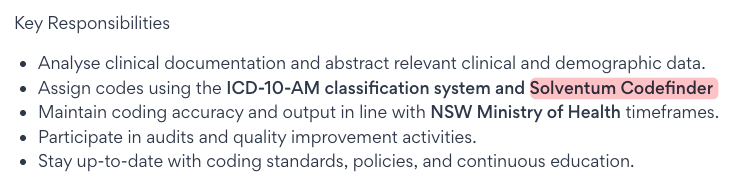
When designing our Diploma of Clinical Coding, we didn’t just pick a coding resource at random. We conducted extensive research into the Australian clinical coding job market, analysing hundreds of position descriptions from hospitals, health services, and coding agencies across the country.

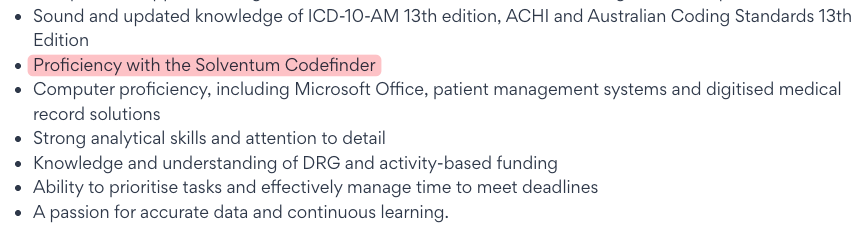
What we discovered was compelling: A significant number of job advertisements specifically mentioned experience with Solventum 3M Codefinder™ as either a requirement or highly desirable attribute. Employers weren’t just looking for coders who understood ICD-10-AM and ACHI – they wanted candidates who could hit the ground running with the specific software their organisation used.

This research led to a clear conclusion: to give our students the best possible chance of transitioning into the workforce quickly upon course completion, we needed to teach them on the same platform they’d be using in their future roles.

By learning on Solventum from day one, our students graduate with:

  • Practical, hands-on experience with industry-standard software
  • Familiarity with the tools and workflows used in real coding departments
  • A competitive advantage when applying for positions
  • The confidence to start coding professionally from their first day on the job

It’s not just about learning to code, it’s about learning to code the way Australian healthcare organisations actually work.

The Advantages of Solventum™ 3M Codefinder™

Considerations with Solventum™

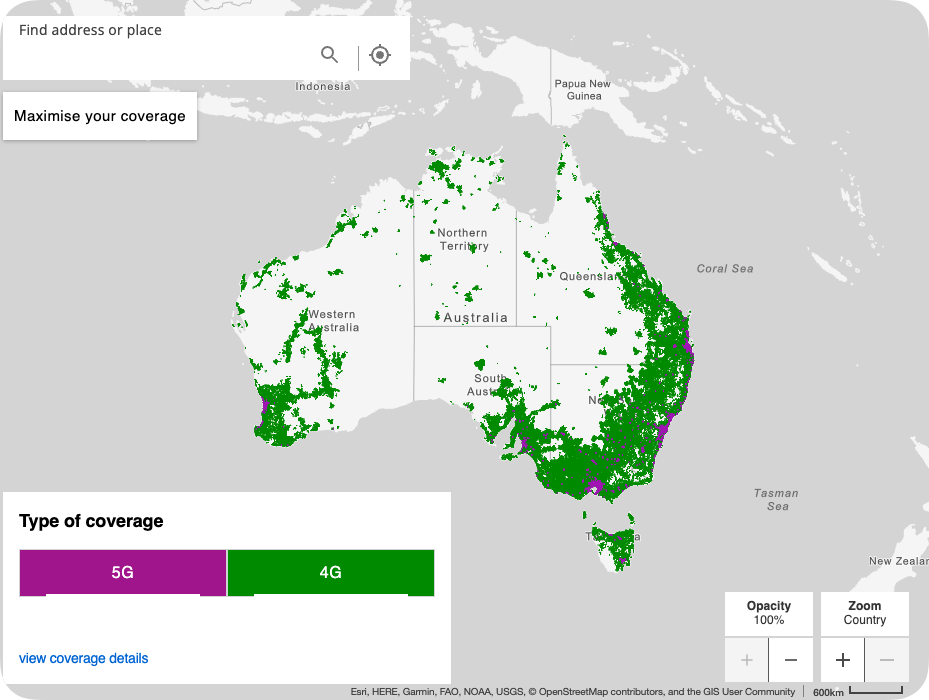
Telstra Mobile Coverage

However, if you frequently study in locations without reliable internet (such as remote areas or during long commutes without mobile data), this could be a limitation. Check out the coverage map and consider your typical study environment before committing to a cloud-based solution.

Note: Starlink now offers 100% internet coverage for Australia.

All the staff I have had the pleasure of dealing with, are so supportive and very prompt with replies. Even the way the course is structured is impressive. I believe because of the way this course is set up and the support provided, I continue to be driven and motivated to keep going. The best part about it all, is that it’s on my own time schedule, which is so important with a young family and currently working.
Aleks, Diploma of Clinical Coding Graduate

Option 2: TurboCoder® – The Desktop Alternative

TurboCoder® is a downloadable desktop application that provides comprehensive access to ICD-10-AM, ACHI, and ACS coding resources. It represents a middle ground between cloud-based platforms and traditional hard-copy books, offering digital convenience with offline capability.

The Advantages of TurboCoder®

Considerations with TurboCoder®

Option 3: Hard-Copy Textbooks – The Traditional Approach

Hard-copy codebooks are the traditional format that clinical coders have used for decades. These physical textbooks contain printed versions of ICD-10-AM, ACHI, and ACS, organised in the familiar tabular and alphabetical index format.

The Advantages of Hard-Copy Textbooks

Considerations with Hard-Copy Textbooks

Side-by-Side Comparison

To help you make an informed decision, Comprehensive comparison of all three options:

Feature Solventum™ 3M Codefinder™ TurboCoder® Hard Copy Textbooks
Cost $495 for the duration of your enrolment (offer exclusive to TalentMed students) $572 for 2 years (Eligible student pricing) $330 plus delivery (Eligible student pricing)
Operating systems Yes – Windows, macOS, Chrome OS Windows only Yes – Universal, no device needed
Internet required Yes (cloud based) No (after installation) No
Automatic updates Yes – Always current No – Downloadable updates required No – May need new editions ($330 plus delivery)
Multi device access Yes – Desktop, laptop, tablet No – Single device only No – Physical location only
TalentMed integration Yes – seamless integration No – Separate access No
Search functionality Advanced – Search and verification tools Yes – Digital search available No – Manual lookup only
Portability Excellent – Study anywhere Limited – One device Poor – Heavy and bulky
Setup required None – Instant browser access Yes – Installation and configuration None
Industry relevance Excellent – Used by coders across Australia Moderate – Industry use Low – Rarely used in professional practice
Job ready skills Excellent – Software experience employers want Good – Digital coding skills Limited – Workplace preparation needed
Best for Students wanting industry standard tools and maximum flexibility Windows users needing offline access with one PC Students preferring traditional books with limited internet

Making Your Decision

Choosing these resources is an important decision, but tNo universally “wrong” choice. Each option has legitimate merits, and the best choice depends on your individual circumstances, learning style, study environment, and career goals.

Here at TalentMed, you’re welcome to use any of the above resources that best suit your learning needs.

Ready to Start Your Clinical Coding Journey?

TalentMed’s Diploma of Clinical Coding provides comprehensive ICD-10-AM training with hands-on practice using real medical records. Our expert trainers guide you from basics to advanced coding techniques.

Why Choose TalentMed for Your ICD-10-AM Education

TalentMed’s Diploma of Clinical Coding (HLT50321) offers one of the most comprehensive ICD-10-AM training programs in Australia:

  • Expert Trainers: Learn from qualified coders with real-world experience
  • Practical Focus: Code real medical records using real coding resources
  • Current Resources: Access to the latest ICD-10-AM learning materials and coding standards
  • Seamless Software Training: Hands-on experience with Solventum™ 3M Codefinder™
  • Career Support: Job search assistance and preparation
  • Flexible Learning: Study 100% online at any time, from the comfort of your own home
  • Ongoing Updates: Stay current with classification changes

Take the First Step Today

Choosing the right coding resources is an important decision, but it’s just one part of your journey to becoming a skilled clinical coder. What matters most is taking that first step.

The healthcare industry needs skilled clinical coders who understand the importance of accurate classification. Your attention to detail and commitment to learning can make a real difference in healthcare delivery, funding, and patient outcomes.

When you choose TalentMed, you don’t need to organise your own coding resources separately. We’ve done the hard work for you – everything is seamlessly integrated with your enrolment. Your Solventum 3M Codefinder™ access is valid for the full duration of your enrolment, accessible through the same portal you use for your learning materials. No separate purchases to coordinate, no additional accounts to manage, no technical setup headaches.

It’s all part of our commitment to making your learning journey as smooth and focused as possible. While other students are juggling multiple suppliers, login credentials, and compatibility issues, you’ll simply log in to your TalentMed portal and start coding. Your resources, your course materials, and your support – all in one place.

Don’t let uncertainty hold you back. Clinical coding is learnable, logical, and opens doors to a stable, rewarding career in healthcare. The demand for qualified coders continues to grow, and with TalentMed’s comprehensive training and integrated resources, you’ll be well-prepared to meet that demand from day one.
[/fusion_builder_container] [/fusion_builder_column][/fusion_builder_row]
Preferred method of contact *
Course information pack
[/fusion_builder_container] [/fusion_builder_column][/fusion_builder_row]

3 Spooky Episodes to Code with ICD-10-AM this Halloween

3  Spooky Episodes to Code with ICD-10-AM this Halloween

It’s Halloween, and while most people are worried about ghosts, ghouls, and things that go bump in the night, we clinical coders know where the REAL terror lies – in poorly documented clinical notes! 😱

But fear not! This Halloween, we’re embracing the spooky season with three frighteningly fun coding scenarios that will test your ICD-10-AM (and ACHI) knowledge, tickle your funny bone, and remind you why clinical coding is never boring.

Fire up your Solventum™ 3M Codefinder™ or dust off your old spellcodebooks and Read on for some supernatural coding challenges! 🦇

The Rules:

  1. Try coding each scenario yourself first (no peeking!)
  2. Hover to reveal the answers
  3. Hopefully learn something useful along the way

Ready? Let’s get spooky! 👻

🧛‍♂️ EPISODE 1: “The Vampire’s Victim”

Your mission:
Code this supernatural encounter! 🧛
🔓 HOVER TO REVEAL THE CODES
  • S11.88 – Open wound of other parts of neck (for the two puncture wounds)
  • Y08.09 – Assault by other specified means, unspecified person
  • Y92.9 – Unspecified place of occurrence (halloween party venue)
  • U72 – Leisure activity, not elsewhere classified (attending a party)

The Truth Bomb: Sorry, tNO vampire code in ICD-10-AM! Shocking, we know. This was actually another party-goer in a very convincing costume. We code what’s REAL, not what’s supernatural.

Coder’s Reality Check:

  • Patient statements ≠ Diagnosis codes.
  • “Bitten by vampire” goes in the clinical notes (for entertainment value).
  • “Bitten by person” goes in your coding.
  • Why not use S11.7? As per ACS 1907, codes from this block with a .7 fourth character are exclusively assigned when the number of specific injury codes exceeds the maximum available diagnosis code fields.
  • Should we code for administration of tetanus toxoid? As per ACS 0042, it would only be coded if it was the principal reason for admission.
  • The anti-vampire medication a.k.a garlic question? Not our department! 😄

Pro Tip: If documentation suggests that this was not an assault and rather the result of consensual roleplay gone wrong, you’d code W50 – Hit, struck, kicked, twisted, bitten or scratched by another person. But in this episode, the patient states they were “attacked”. Context matters!

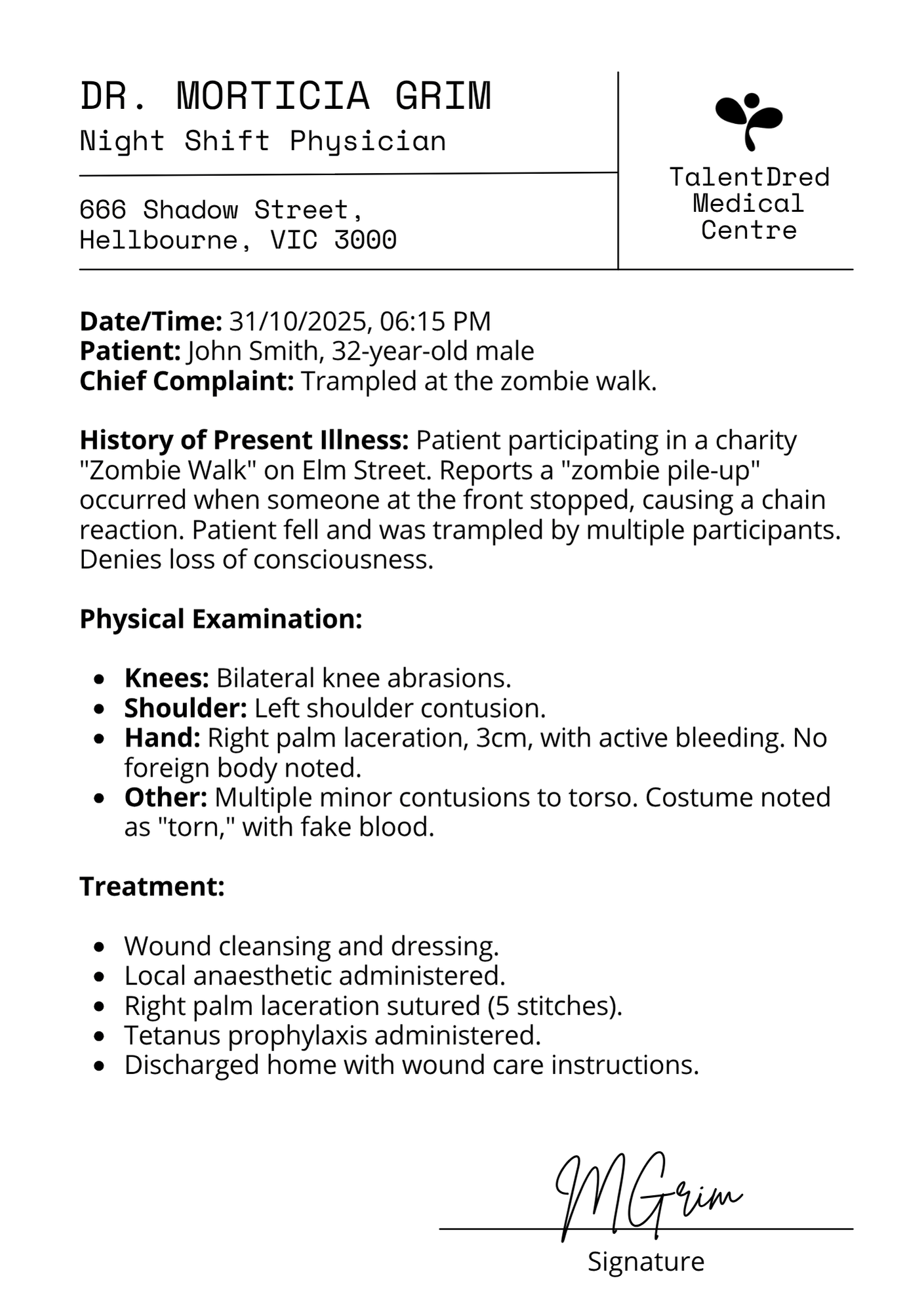
🧟‍♀️ EPISODE 2: “The Zombie Apocalypse”

Your mission:
Multiple injuries, multiple causes, maximum chaos! 🧟
🔓 HOVER TO REVEAL THE CODES

S61.88 – Open wound of Palm (PRINCIPAL – required sutures!)
S40.0 – Contusion of shoulder and upper arm
T09.05 – Contusion of trunk, level unspecified
S80.81 – Abrasion of lower leg
W52 – Fall, same level, from, being crushed, pushed or stepped on by crowd or human stampede (zombie pile-up!)
W26.9 – Contact with unspecified sharp object(s) (otherwise mechanism for hand laceration, if documented)
Y92.49 – Unspecified public highway, street or road (place of occurrence)
U72 – Leisure activity, not elsewhere classified (zombie walk)
30026-00 – Repair of wound of skin and subcutaneous tissue of other site, superficial (for the 3cm laceration)

The Plot Twist: That sutured laceration is your principal diagnosis! Why? Because it required the most intervention (5 stitches, tetanus shot, the whole deal).

Coder’s Wisdom:

  • Multiple injuries = Multiple codes (don’t be lazy, see ACS 1907).
  • Sequence the one that needed the most treatment first.
  • “Zombie pile-up” is not an official ICD-10-AM term (we checked).
  • The torn costume doesn’t get coded (even though patient is devastated).

Fun Fact: Your accurate coding helps public health officials track injury patterns from large crowd events, potentially preventing future zombie pile-ups! 🧟‍♂️

🧙‍♀️ EPISODE 3: “The Witch’s Brew”

Your mission:
Code this fiery potion mishap! 🧙‍♀️
🔓 HOVER TO REVEAL THE CODES

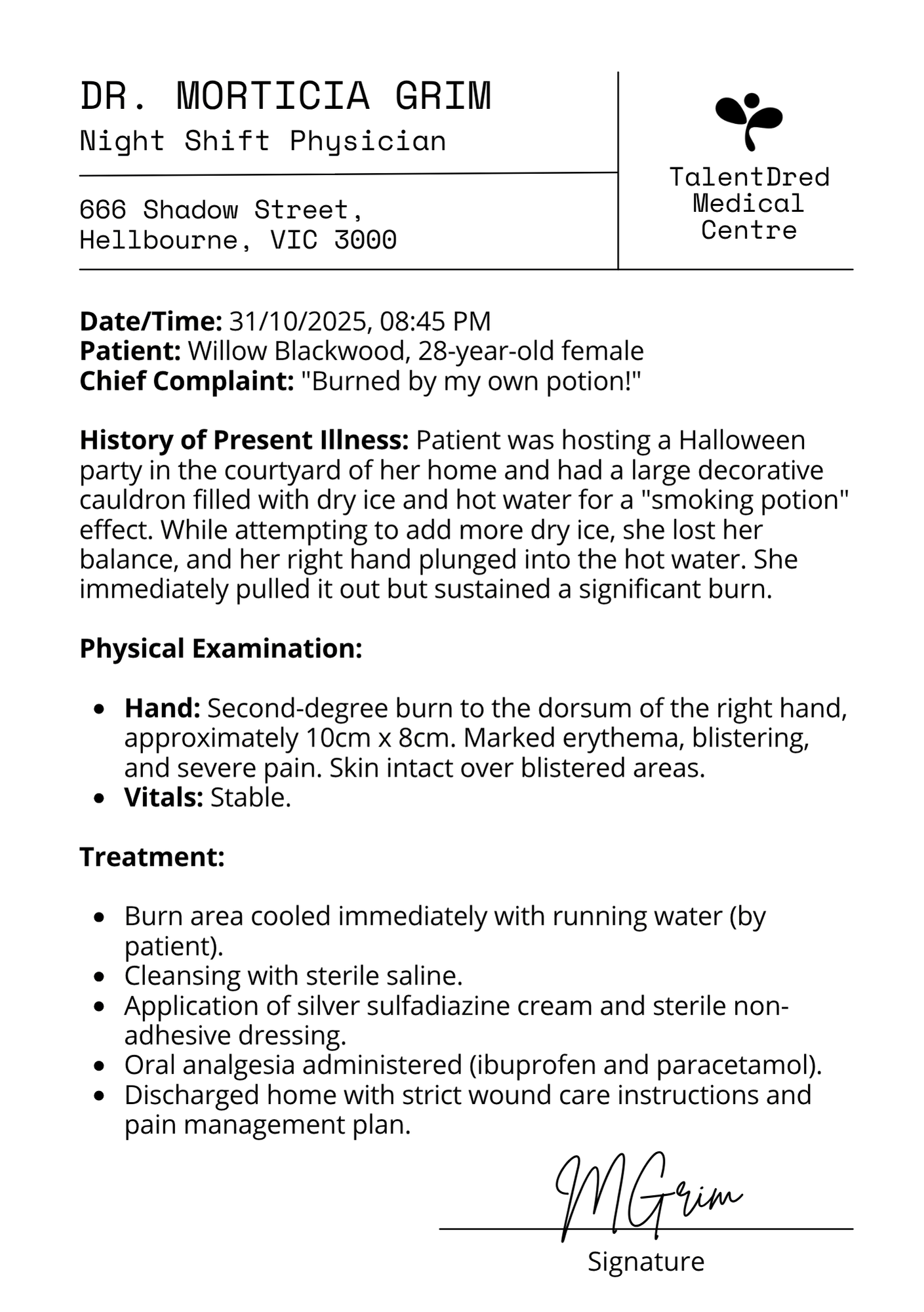
T23.2 – Partial thickness [blisters, epidermal loss] burn of wrist and hand
X11.1 – External cause, Contact with contained hot tap-water (for the hot water in the cauldron)
Y92.01 – Place of occurrence, Home, outdoor area (for the party at home)
Y72 – Leisure activity, not elsewhere classified (hosting a Halloween party)

The Reality: A common party hazard! Hot liquids and dry ice (while visually impressive) can be dangerous, especially in a crowded, festive environment. The “potion” was just hot water, but the burn is very real.

The Lesson:

  • The degree and site of the burn are crucial for accurate coding (T23.2 for second-degree, dorsum of hand).
  • The external cause (X11.1 for contained hot tap water) specifies the type of hot liquid.
  • Even though the burn is second-degree, initial management in ED often involves dressing and pain relief, with follow-up for more extensive burns.

Safety Reminder: Always supervise decorative cauldrons with hot liquids, especially when adding dry ice, which can cause chemical burns if handled improperly! 🧪

🎃 Ready to Master ICD-10-AM?

Don’t worry if these coding challenges seem daunting – with proper training, you’ll be deciphering medical mysteries and coding confidently in no time!

TalentMed’s Diploma of Clinical Coding provides comprehensive ICD-10-AM training with hands-on practice using real medical records. Our expert trainers guide you from the basics of diagnosis and procedure coding to advanced techniques, ensuring you’re ready for any spooky scenario the ED throws at you!

Why Choose TalentMed for Your ICD-10-AM Education

TalentMed’s nationally recognised Diploma of Clinical Coding offers one of the most comprehensive ICD-10-AM training courses in Australia, designed to banish your coding fears:

  • Expert Trainers: Learn from qualified coders with real-world experience – they’ve seen it all, from vampire bites to zombie tramplings!
  • Practical Focus: Code real medical records, not just theoretical potions.
  • Current Resources: Access to the latest ICD-10-AM learning materials and coding standards, ensuring your knowledge is never outdated like a dusty old spellbook.
  • Software Training: Hands-on experience with industry tools like Solventum™ 3M Codefinder™, so you’re ready to use the magic employers are looking for!
  • Career Support: Job search assistance and preparation – we’ll help you find your professional coven.
  • Flexible Learning: Study 100% online at any time, from the comfort of your own crypt (we mean home!), fitting around your busy schedule.
  • Ongoing Updates: Stay current with classification changes – no scary surprises when new codes appear!

Take the First Step Today

ICD-10-AM might seem like a dark, complex labyrinth at first glance, but remember – every expert coder started exactly where you are now. With the right education, practice, and support, you’ll soon be translating medical records into codes with confidence and accuracy.

The healthcare industry needs skilled clinical coders who understand the importance of accurate classification. Your attention to detail and commitment to learning can make a real difference in healthcare delivery, funding, and patient outcomes.

Don’t let uncertainty hold you back. ICD-10-AM is learnable, logical, and opens doors to a stable, rewarding career in healthcare. It’s a career that’s anything but scary.

[/fusion_builder_container] [/fusion_builder_column][/fusion_builder_row]
Preferred method of contact *
Course information pack
[/fusion_builder_container] [/fusion_builder_column][/fusion_builder_row]
Share This Artcle

From Healthcare Worker to Clinical Coding Specialist: Your Career Transformation Guide

From Healthcare Worker to Clinical Coder: Your Career Transformation Guide

Are you a healthcare worker feeling stuck in your current role? Perhaps you’re a nurse experiencing burnout from shift work, an allied health professional seeking better work-life balance, or a medical receptionist ready to advance your career.

The good news is that your healthcare experience has already prepared you for one of Australia’s most in-demand careers: clinical coding.

Clinical coders are the unsung heroes of the healthcare system, translating medical records into standardised codes that drive hospital funding, health statistics, and quality improvement initiatives. With the Australian healthcare sector desperately seeking qualified clinical coders, now is the perfect time to leverage your existing healthcare knowledge into this rewarding career path.

Your journey from healthcare worker to clinical coding specialist isn’t just possible – it’s a natural progression that thousands of Australian healthcare professionals have successfully made. This comprehensive guide will show you exactly how to make this transformation, backed by real data and practical strategies.

Why Healthcare Workers Make Exceptional Clinical Coders

Your background in healthcare gives you a significant advantage when transitioning to clinical coding.

Why:

  • Medical Terminology: You already understand the language of healthcare, from anatomy and physiology to common procedures and medications
  • Clinical Context: Your hands-on experience helps you understand the ‘why’ behind medical documentation
  • Attention to Detail: Healthcare roles demand precision – a skill directly transferable to accurate coding
  • Patient Care Perspective: You understand how proper documentation impacts patient outcomes and continuity of care
  • Healthcare System Knowledge: You’re familiar with hospital workflows, departments, and documentation processes

This existing knowledge base means you’re not starting from scratch. You’re building on a solid foundation that gives you a competitive edge over candidates without healthcare experience.

Industry Insight: Here at TalentMed, healthcare workers who transition to clinical coding typically complete their training 30% faster than those without healthcare backgrounds.

Average Course Completion with healthcare background
Average Course Completion without healthcare background

The Financial Benefits of Career Transformation

Let’s talk numbers. Making the switch to clinical coding can significantly impact your earning potential and financial security. Realistic comparison of salaries across different healthcare roles versus clinical coding positions, based on current Australian market data:

Current Healthcare Roles (Average Annual Salaries):

Clinical Coding Career Progression:

  • Graduate Clinical Coder: $75,000 – $80,000
  • Clinical Coder (2-3 years): $80,000 – $88,000
  • Senior Clinical Coder: $88,000 – $98,000
  • Clinical Coding Team Leader: $98,000 – $115,000
  • Clinical Coding Manager: $115,000 – $145,000+

Beyond base salary, clinical coders often enjoy additional benefits including flexible work arrangements, remote work opportunities (valued at $5,000-$10,000 annually in reduced commuting costs and expenses), and professional development allowances averaging $2,000 per year.

Work-Life Balance: The significant development

One of the most compelling reasons healthcare workers transition to clinical coding is the dramatic improvement in work-life balance.

Consider these lifestyle benefits:

Say Goodbye to:

  • Night shifts and rotating rosters

  • Weekend and public holiday work

  • Physically demanding tasks and manual handling injuries
  • High-stress emergency situations
  • Direct exposure to infectious diseases
  • Mandatory overtime during staff shortages

Say Hello to:

  • Standard Monday-Friday business hours (typically 9:00am-5:00pm)

  • Part-time and casual positions available
  • Remote work opportunities (the majority of clinical coders work from home at least part-time)

  • Comfortable, ergonomic office environment
  • Predictable workload and deadlines
  • Time for family, hobbies, and self-care
  • Reduced risk of workplace injury and burnout

The mental and physical health benefits of this transition cannot be overstated. Clinical coders report significantly lower stress levels and higher job satisfaction compared to their previous healthcare roles.

Your Transformation Roadmap: Step-by-Step Guide

Ready to make the transition?

Your practical roadmap to becoming a clinical coding specialist:

Step 1: Assess Your Readiness (Months 1-2)

  • Evaluate your current skills and identify transferable competencies
  • Research clinical coding roles on SEEK and Indeed
  • Request TalentMed’s free information pack about clinical coding careers
  • Calculate your potential ROI based on salary increases

Step 2: Enrol in Quality Education (Month 3)

  • Choose a nationally recognised qualification like TalentMed’s Diploma of Clinical Coding (HLT50321). This comprehensive programme offers:
    • Flexible study options: Online, face-to-face, or blended learning
    • Industry-experienced trainers: Who understand healthcare workers’ unique needs
    • Practical coding experience: Using real de-identified medical records
    • RPL opportunities: Get credit for your healthcare experience
    • Job search assistance: Connections with major healthcare employers

Step 3: Maximise Your Learning (Months 4-12)

  • Leverage your healthcare background to accelerate understanding
  • Join TalentMed’s exclusive study groups for healthcare professionals
  • Build your network through social and professional channels
  • Practice coding scenarios relevant to your healthcare specialty (included in TalentMed’s course).

Step 4: Strategic Job Search (Months 11-13)

  • Update your resume to highlight both healthcare and coding competencies
  • Target hospitals where you have existing connections
  • Consider starting with casual or contract coding positions if necessary
  • Prepare for coding audition tests (TalentMed provides practice coding materials)
  • Negotiate salary based on your combined skill set

Step 5: Launch Your New Career (Month 13+)

  • Set 90-day goals for your new role
  • Continue professional development opportunities through associations such as the CCSA
  • Join coding quality committees to showcase expertise
  • Plan your 5-year career trajectory
  • Mentor other healthcare workers making the transition

Overcoming Common Concerns

It’s natural to have concerns about career change. Let’s address the most common worries healthcare workers express:

Industry Insights & Employment Landscape

Understanding the current job market and future trends will help you make an informed decision about your career transition.

What the data tells us:

Current Job Market Analysis

The demand for clinical coders in Australia has never been stronger.

According to SEEK’s employment data:

  • Clinical coding job advertisements increased by 47% in 2023 compared to 2022
  • Average time to fill a clinical coding position is 62 days (indicating high demand)
  • Major employers actively recruiting include public hospitals, private hospitals, health insurers, and consulting firms

Geographic Hotspots for Opportunities

While clinical coding jobs exist nationwide, certain areas show particularly strong demand. Based on current job listings:

  • Major cities: The majority of clinical coding positions are concentrated in metropolitan areas where large hospital networks are located
  • Regional opportunities: Growing demand in regional centres, with many positions offering remote work flexibility
  • Remote work: An increasing number of positions (especially post-COVID) offer partial or full remote arrangements, meaning location is becoming less of a barrier

Industry Growth Projections

The Australian Digital Health Agency’s 2024 Workforce Report projects:

  • 23% growth in clinical coding positions over the next 5 years
  • $2.3 billion investment in digital health infrastructure creating new coding roles
  • 15,000 additional coders needed by 2029 to meet demand

Emerging Opportunities

New areas of growth for clinical coders include:

  • Telehealth Coding: Specialising in virtual consultation documentation (15% salary premium)
  • Private Health Insurance: Growing sector with competitive salaries and benefits
  • International Remote Coding: Australian coders working for US and UK healthcare systems
  • Consulting and Freelance: Experienced coders earning $80-120 per hour as contractors
  • AI and Automation Support: Coders needed to train and audit AI-assisted coding systems

Market Insight: The recent Aged Care Royal Commission recommendations require enhanced documentation standards, creating an estimated 2,000 new clinical coding positions in the aged care sector alone.

Ready to Transform Your Healthcare Career?

TalentMed’s Diploma of Clinical Coding is specifically designed for healthcare workers like you. With flexible study options, industry-expert trainers, and comprehensive career support, we’ll help you transition smoothly into this rewarding profession.

The Growing Demand for Clinical Coders

The timing for your career transformation couldn’t be better. Australia’s healthcare sector is experiencing an unprecedented demand for qualified clinical coders, driven by several factors:

  • Activity-Based Funding: Hospitals rely on accurate coding for appropriate reimbursement
  • Digital Health Transformation: Electronic medical records require skilled coders to maximise their value
  • Ageing Workforce: Many experienced coders are approaching retirement
  • Growing Population: Australia’s population surge through increased migration is driving unprecedented healthcare demand. With over 500,000 new migrants arriving annually and population expected to reach 30 million by 2030, healthcare services are expanding rapidly. Every new patient interaction requires accurate clinical coding for proper funding and service planning, creating sustained demand for qualified coders across all healthcare settings.
  • Healthcare Expansion: New hospitals and health services create additional coding positions
  • Quality and Safety Requirements: Accurate coding is essential for monitoring healthcare outcomes

The Department of Health’s workforce planning indicates that clinical coding will remain a critical shortage occupation for at least the next decade, ensuring job security for qualified professionals.

Why Choose TalentMed’s Diploma of Clinical Coding

TalentMed understands the unique needs of healthcare workers transitioning to clinical coding. Our Diploma of Clinical Coding (HLT50321) offers specific advantages:

  • Recognition of Prior Learning (RPL) Pathways: Your healthcare experience counts towards your qualification
  • Healthcare-Focused Curriculum: Examples and case studies relevant to your background
  • Flexible Study Options: Choose online, classroom, or blended learning to fit your schedule
  • Industry Partnerships: Direct connections with major healthcare employers
  • Ongoing Support: Career guidance continues after graduation
  • Payment Plans: Affordable , interest-free options that don’t strain your budget during transition

Our trainers are industry professionals who have made similar career transitions and understand the challenges you face. In fact, one of our trainers was a healthcare worker (midwife), who enrolled with TalentMed and is now working as part of our training and assessment team. They provide practical, real-world insights that go beyond textbook learning.

Take the First Step Today

Your healthcare experience has already given you a strong foundation for success in clinical coding. Now it’s time to build on that foundation with specialised education that will open doors to a more balanced, rewarding career.

The healthcare system needs skilled clinical coders who understand the clinical context behind the codes. Your unique perspective as a healthcare worker makes you invaluable in ensuring accurate documentation that supports quality patient care and appropriate funding.

Don’t let another year pass wondering “what if?” Your skills, experience, and dedication to healthcare make you an ideal candidate for a successful clinical coding career. The investment you make in your education today will pay dividends through improved work-life balance, increased earning potential, and renewed career satisfaction.

Your healthcare journey has prepared you for this moment. Clinical coding offers the perfect blend of medical knowledge application, professional growth, and work-life balance. With TalentMed’s expert guidance and your healthcare background, you’re already halfway to a rewarding new career.

Join the hundreds of healthcare workers who have successfully transformed their careers through clinical coding. Your future as a clinical coder starts today.

[/fusion_builder_container] [/fusion_builder_column][/fusion_builder_row]
Preferred method of contact *
Course information pack
[/fusion_builder_container] [/fusion_builder_column][/fusion_builder_row]

The Future of Clinical Coding in Australia: Trends, Predictions & Career Opportunities

This article was written as a point-in-time view of where clinical coding was heading. For our current, maintained guide to how automation and artificial intelligence are actually being used in Australian clinical coding, read AI and clinical coding in Australia.

The complete clinical coding career guide: Clinical Coding in Australia. Want detail on ICD-11 specifically? See our deep-dive at ICD-11 in Australia.

As healthcare races towards a data-driven future, clinical coding in Australia stands at the forefront of a revolution that promises to transform patient care from the ground up.

With technological advancements, changing healthcare policies, and a growing emphasis on data-driven decision-making, the landscape of clinical coding is set to transform in 2025 and beyond.

In this comprehensive exploration, we’ll delve into the emerging trends, challenges, and opportunities that will shape the future of clinical coding in Australia.

The Rise of Artificial Intelligence and Machine Learning

One of the most significant trends shaping the future of clinical coding is the integration of Artificial Intelligence (AI) and Machine Learning (ML) technologies. While some fear that AI might replace human coders, the reality is far more nuanced.

Predictions:

  • AI-assisted coding: Advanced algorithms will assist coders by suggesting codes based on clinical documentation, significantly improving efficiency and accuracy.
  • Natural Language Processing (NLP): NLP technologies will be able to interpret unstructured clinical notes, making the coding process faster and more precise.
  • Continuous learning systems: AI systems will learn from human coders’ decisions, constantly improving their accuracy and adapting to new coding guidelines.

Impact on Clinical Coders: Far from making human coders obsolete, these technologies will elevate the role of clinical coders. Professionals will need to develop skills in AI oversight, quality assurance, and complex case management. The focus will shift from routine manual coding to handling intricate cases that require human judgment and expertise.

The Shift Towards Remote Work

Since 2020, the pandemic accelerated the trend towards remote work, and clinical coding has proven to be well-suited for this model.

Predictions:

  • Hybrid work models: Many healthcare organisations will adopt hybrid models, allowing coders to work remotely with occasional on-site presence.
  • Virtual collaboration tools: Advanced collaboration platforms will enable seamless communication between coders, clinicians, and other healthcare professionals.
  • Cybersecurity focus: With increased remote work, there will be a greater emphasis on data security and privacy measures.

Impact on Clinical Coders: This shift offers greater flexibility and work-life balance for coders. However, it also requires strong self-discipline, time management skills, and the ability to work independently. Coders will need to be proficient in using various digital tools and maintaining productivity in a remote environment. For more information, check out our blog article From Hospital to Home Offer: The Flexibility of a Career in Clinical Coding.

Specialisation and Niche Expertise

As healthcare becomes more complex, there will be a growing demand for clinical coders with specialised knowledge in specific medical fields.

Predictions:

  • Subspecialty coding: Coders will more and more, specialise in areas such as oncology, cardiology, or neurology.
  • Research and clinical trials: There will be a rising demand for coders who can accurately code for research studies and clinical trials.
  • Rare diseases expertise: With advancements in genomics and personalised medicine, coders with knowledge of rare diseases will be highly valued.

Impact on Clinical Coders: This trend offers opportunities for career growth and higher earning potential. Coders will need to commit to continuous learning and possibly pursue additional certifications in their chosen specialties.

Integration of Blockchain Technology

Blockchain technology has the potential to revolutionise health information management, including clinical coding.

Predictions:

  • Immutable audit trails: Blockchain will provide tamper-proof records of coding decisions, enhancing transparency and accountability.
  • Interoperability: Blockchain could facilitate seamless sharing of coded data across different healthcare providers and systems. This is one area that is particularly challenging in the Healthcare industry.
  • Smart contracts: Automated coding audits and payments based on predefined criteria could be implemented using blockchain technology.

Impact on Clinical Coders: While the core skills of clinical coding will remain crucial, coders will need to understand blockchain basics and how it impacts data integrity and sharing. This technology could streamline many administrative aspects of coding, allowing coders to focus more on complex coding decisions.

Stay ahead of the curve with TalentMed’s Diploma of Clinical Coding. Our curriculum is regularly updated to reflect the latest industry trends and technologies.

Enhanced Focus on Data Analytics and Reporting

As healthcare becomes more and more, data-driven, the role of clinical coders in providing accurate, detailed data for analytics will become even more critical.

Predictions:

  • Real-time analytics: Coded data will be used for real-time decision-making in clinical settings.
  • Predictive modelling: Coded data will play a crucial role in predictive analytics for population health management and resource allocation.
  • Performance metrics: Coding accuracy and efficiency will be key performance indicators for healthcare organisations.

Impact on Clinical Coders: Coders will need to develop a strong understanding of data analytics and its applications in healthcare. They may be called upon to interpret coding data trends and contribute to strategic decision-making processes.

Evolution of Coding Systems

While ICD-10-AM is currently used in Australia, the coding system itself will continue to evolve to meet changing healthcare needs.

Predictions:

  • More frequent updates: Coding systems may see more regular updates to keep pace with medical advancements including the upcoming ICD-10-AM Thirteenth Edition and the development of ICD-11-AM.
  • Integration of social determinants of health: Coding systems may expand to capture more data on social and environmental factors affecting health.
  • Alignment with international standards: There may be efforts to align Australian coding standards more closely with international systems for better global health data comparability.

Impact on Clinical Coders: Coders will need to be adaptable and committed to ongoing education to keep up with these changes. The ability to quickly learn and apply new codes and guidelines will be crucial.

Expanding Career Opportunities

As the healthcare landscape evolves, so too does the range of career opportunities for clinical coders in Australia.

Predictions:

  • Emergence of hybrid roles: Positions combining clinical coding with data analytics, AI expertise, or compliance management will become common.
  • Specialisation premium: Coders with expertise in specific medical fields (e.g., oncology, cardiology) will be highly sought after and command higher salaries.
  • Global reach: Australian coders will find more opportunities to work on international projects, leveraging their skills in a global healthcare market.

Impact on Clinical Coders: This diversification of career paths offers exciting prospects for professional growth and specialisation. Coders will have the opportunity to align their careers with their interests and strengths, whether that’s in technology, data analysis, education, or clinical specialties. However, this also means that ongoing education and skill development will be crucial to capitalise on these opportunities.

Some emerging roles to watch for include:

  • Health Data Analyst
  • AI-Assisted Coding Specialist
  • Clinical Coding Compliance Officer
  • Telehealth Coding Coordinator
  • International Coding Consultant
  • Clinical Coding Educator – check out our career opportunities here.
  • Blockchain Health Record Specialist
  • Clinical Documentation Improvement (CDI) Specialist

These roles represent just a fraction of the possibilities that will be available to skilled clinical coders in the coming years. The key to accessing these opportunities will be a strong foundation in coding principles, coupled with a willingness to adapt and acquire new skills as the industry evolves.

At TalentMed, we’re committed to preparing our students not just for today’s coding roles, but for the diverse career opportunities of tomorrow. Our Diploma of Clinical Coding provides a solid foundation that can be leveraged into various specialisations and career paths. With our finger on the pulse of industry trends, we ensure our graduates are well-equipped to seize these emerging opportunities and thrive in the evolving world of health information management.

Conclusion

The future of clinical coding in Australia is bright, dynamic, and full of opportunities. While technological advancements will undoubtedly change the landscape, they will also elevate the role of clinical coders to new heights. The successful coder of 2025 and beyond will be tech-savvy, adaptable, specialised, and equipped with strong analytical and ethical decision-making skills.

As we look towards this exciting future, it’s clear that ongoing education and skill development will be crucial. Whether you’re considering a career in clinical coding or looking to upgrade your existing skills, now is the time to prepare for the future.

Ready to embark on your journey towards a rewarding career in clinical coding? TalentMed’s Diploma of Clinical Coding is designed to prepare you for the challenges and opportunities of tomorrow. With our industry-aligned curriculum, expert instructors, and focus on practical skills, you’ll be well-equipped to thrive in the evolving world of healthcare information management.

Don’t just keep up with the future – help shape it. Enrol in our Diploma of Clinical Coding today and take the first step towards a future-proof career in healthcare.

[/fusion_builder_container]
Preferred method of contact *
Course information pack
[/fusion_builder_column][/fusion_builder_row]

Preparing for ICD-10-AM Thirteenth Edition: Your Guide to Success

As we approach the release of the International Statistical Classification of Diseases and Related Health Problems, Tenth Revision, Australian Modification (ICD-10-AM) Thirteenth Edition, clinical coders across Australia are gearing up for significant changes in their field.

Set to be implemented on 1 July 2025, this update brings a host of modifications that will impact coding practices, data collection, and healthcare reporting.

As your trusted partner in healthcare education, we’ll explore the key changes, their implications, and how you can prepare for this important transition.

What’s Coming: ICD-10-AM Thirteenth Edition

The Independent Health and Aged Care Pricing Authority (IHACPA) has announced that the ICD-10-AM Thirteenth Edition, along with the Australian Classification of Health Interventions (ACHI) and Australian Coding Standards (ACS), is scheduled for release on 1 July 2025. From the date of this article, this gives us all about 6 months to prepare, and we’re here to support you every step of the way.

Major Updates to ICD-10-AM

The Thirteenth Edition brings several important updates to ICD-10-AM, addressing gaps in the classification and reflecting contemporary clinical knowledge and practice.

Key changes include:

a) New and Missing Clinical Concepts:

  • Creation of a unique code for postural orthostatic tachycardia syndrome (POTS)
  • Expansion of R10.2 Pelvic and perineal pain to distinguish between male and female pelvis
  • Removal of the Excludes note for R45.81 Suicidal ideation, allowing it to be assigned alongside mental health conditions
  • Creation of R45.82 Homicidal ideation
  • New code Z72.7 Use of vaping device
  • Consideration of codes to capture concepts relating to voluntary assisted dying

b) Social Factors:

  • New codes for health literacy and other types of literacy
  • Codes for workplace relationship and culture problems
  • Expanded codes for homelessness, including sheltered and unsheltered categories
  • Codes for Aboriginal and Torres Strait Islander people and migrant cultural issues
  • Enhancements to capture social factors related to natural disasters, bullying, employment issues, and social isolation

c) Subacute Settings:

  • New code R41.81 for Age-associated cognitive decline
  • Amendment of R54 to Ageing associated decline
  • Revision of category Z74 Problems related to care-provider dependency
  • Expansion of Z75.2 Other waiting period for investigation and treatment

ACHI Updates

The Australian Classification of Health Interventions (ACHI) is also undergoing significant changes, primarily driven by updates to the Medicare Benefits Schedule (MBS) and the incorporation of new health technologies.

Key updates include:

a) MBS-driven changes:

  • Amendments to blocks and codes for microvascular repair, anastomosis, and graft
  • New codes for transcatheter mitral valvuloplasty and heart valve explants
  • Expansion of arthrodesis and excision of lesion codes for ankle, hindfoot, and midfoot
  • Addition of codes for neurolysis and nerve decompression of the arm.

b) New health technologies:

  • Creation of a code for pulmonary embolectomy
  • New code for reconstruction of breast, including therapeutic mammoplasty
  • Creation of 30390-02 [1926] Laparoscopic approach, not elsewhere classified

c) Organ, tissue, and cell procurement and transplantation:

  • New codes for transplantation and procurement of various tissues and cells
  • Expansion of codes to identify living and posthumous donors

Australian Coding Standards (ACS) Updates

The Thirteenth Edition brings significant changes to the ACS, including:

a) Introduction of Cluster Coding:

  • A new mechanism to link related diagnosis codes through a diagnosis cluster identifier (DCID)
  • Initial implementation for external cause codes and chronic conditions
  • Addition of ACS 0004 Diagnosis cluster identifier (DCID)

b) Revision of ACS 1904 Procedural complications:

  • Renamed to “Complications of surgical and medical care”
  • Clarification and simplification of guidelines
  • Elimination of ambiguity and overlap with other standards

c) Clarification of ACS 1924 Difficult intubation:

  • Revision to address ambiguity in code assignment
  • Creation of new code Z98.3 Difficult airway for intubation

d) Standardisation of ACS structure and format:

  • Implementation of a standard template for all ACS chapters
  • Deletion or relocation of content from several ACS

AR-DRG Version 12.0 Refinements

The Australian Refined Diagnosis Related Groups (AR-DRG) classification is also being updated to Version 12.0, with several key changes:

a) New ADRGs:

  • Creation of ADRG U69 Mental and Behavioural Disorders Associated with the Puerperium
  • Disaggregation of ADRG O66 into four new ADRGs in MDC 14 Pregnancy, Childbirth and the Puerperium
  • Creation of ADRG A41 Posthumous Organ Procurement

b) Enhancement of Diagnosis Complexity Level (DCL) precision:

  • Increased granularity for 25 diabetes mellitus codes

c) Review of ADRG 801 General Interventions (GIs) Unrelated to Principal Diagnosis:

  • Reassignment of certain GIs to more appropriate ADRGs

d) Impact of COVID-19 on Classification Development:

The development of AR-DRG V12.0 has taken into account the impact of the COVID-19 pandemic on hospital service delivery and coding practices. IHACPA has investigated:

  • Volatility of cost per episode of care
  • Changes in ICD-10-AM coding practices during the pandemic

While some fluctuations were observed, the overall impact on the complexity model appears to be limited. However, IHACPA will continue to monitor this as the development cycle progresses.

Preparing for the Transition:

Whether you’re a current student, a recent graduate, or an experienced professional, what you can do to prepare:

a) Stay Informed:

  • Regularly check IHACPA’s website for updates and resources
  • Participate in webinars and workshops focused on the changes

b) Review New Codes and Guidelines:

  • Familiarise yourself with new and revised ICD-10-AM, ACHI, and ACS codes and guidelines when made available.
  • Pay particular attention to areas of significant change, such as social factors and new clinical concepts.

c) Upskill and Practice:

  • Enrol in our Diploma of Clinical Coding or consider a professional development course
  • Use sample cases to practise applying new codes and guidelines
  • Participate in coding exercises focused on the new edition’s changes

d) Prepare for Cluster Coding:

  • Understand the concept of cluster coding and its implementation
  • Practise linking related diagnosis codes using the new DCID

e) Engage in Continuous Learning:

  • Participate in IHACPA’s education modules on IHACPA Learn
  • Attend training sessions specific to the Thirteenth Edition

f) Collaborate and Network:

  • Join our student community forums to discuss the changes with peers
  • Form study groups to discuss and practise new coding concepts
  • Share insights and challenges with fellow coders

g) Communicate with Clinicians:

  • Educate clinicians on new documentation requirements, particularly for new codes and concepts
  • Work closely with clinical teams to ensure accurate and complete documentation

h) Prepare for System Updates:

  • Liaise with IT departments to ensure coding software is updated in time for the transition
  • Familiarise yourself with any changes to the electronic health record system that may impact coding.

Frequently Asked Questions about ICD-10-AM Thirteenth Edition

The ICD-10-AM Thirteenth Edition is scheduled for implementation on 1 July 2025.

Key changes include new codes for conditions like POTS, expanded social factor coding, introduction of cluster coding, and updates to ACHI and ACS.

Start by staying informed through official channels, practicing with new concepts, and considering upskilling courses like TalentMed’s updated Diploma of Clinical Coding.

Yes, AR-DRG Version 12.0 is being developed in conjunction with the ICD-10-AM Thirteenth Edition, including new ADRGs and enhanced complexity coding.

Looking Ahead: The Future of ICD-10-AM and ICD-11

While preparing for the Thirteenth Edition, it’s important to note that IHACPA is also conducting an ICD-11 mapping project. This project aims to compare ICD-10-AM with ICD-11 and assess the potential benefits and gaps of implementing ICD-11 in Australia. While no immediate transition to ICD-11 is planned, this mapping project will inform future decisions about the classification system.

Resources and Support

IHACPA will be releasing several resources to support the implementation of the Thirteenth Edition, including:

  • Electronic code lists (ECLs) for ICD-10-AM and ACHI
  • Mapping tables between editions
  • Updated classification manuals
  • Education modules on IHACPA Learn
  • ICD-10-AM/ACHI/ACS Chronicle

Clinical coders should make use of these resources to facilitate their transition to the new edition.

How TalentMed is Preparing for Success

We’re committed to ensuring that our students and graduates are at the forefront of these changes. How we’re updating our Diploma of Clinical Coding to meet the new standards:

  • Comprehensive curriculum updates to incorporate all new codes and concepts
  • Enhanced practical training with real-world scenarios using the new classification
  • Introduction of cluster coding exercises to build your skills in this new area
  • Flexible learning options to fit your busy schedule, including online modules and recorded tutorials.

When you enrol with us, you’re not just getting a diploma – you’re gaining a professional development partner. Why our Diploma of Clinical Coding is your best choice:

  • Up-to-the-minute curriculum aligned with Thirteenth Edition changes
  • Practical, hands-on training that prepares you for real-world coding challenges
  • Flexible learning options to suit your lifestyle
  • Strong industry connections to support your career growth
  • Ongoing support and resources for our graduates

Your Next Steps

Whether you’re looking to start your coding career or upgrade your skills for the Thirteenth Edition, we have a pathway for you:

  • Prospective Students: Explore our Diploma of Clinical Coding and take the first step towards an exciting career in healthcare. TNo reason to wait until 1 July 2025 (see the next point below).
  • Current Students: Rest assured that your studies with us will incorporate all the latest changes. We’ll be progressively updating all course materials once the thirteenth edition is released on 1 July 2025. 
  • Experienced Coders and Health Information Managers: It’s never too late to gain a formal qualification in clinical coding. Check out our nationally-recognised Diploma of Clinical Coding to bring you up to speed with the Thirteenth Edition changes.

Remember, the transition to ICD-10-AM Thirteenth Edition is more than just a challenge – it’s an opportunity to enhance your skills and increase your value in the healthcare industry.

With TalentMed by your side, you’ll be well-equipped to navigate these changes and excel in your career.

[/fusion_builder_container]
Preferred method of contact *
Course information pack
[/fusion_builder_column][/fusion_builder_row]

From Hospital to Home Office: The Flexibility of a Career in Clinical Coding

In today’s rapidly evolving job market, flexibility has become a prized aspect of any career. For those seeking a profession that combines healthcare knowledge with the option to work remotely, clinical coding offers an exciting opportunity. Read on for how a career in clinical coding can take you from the bustling hospital environment to the comfort of your home office, and why this flexibility is becoming more and more, important in the modern workforce.

The Changing Landscape of Healthcare Careers

The healthcare industry has long been associated with on-site work, with most roles requiring a physical presence in hospitals, clinics, or other medical facilities. However, the digital revolution and recent global events have dramatically shifted this paradigm. Among the various healthcare professions, clinical coding has emerged as a field particularly well-suited to remote work.

What is Clinical Coding?

Before we delve into the flexibility of the role, it’s essential to understand what clinical coding entails. Clinical coders are healthcare professionals responsible for translating medical records and diagnoses into standardised codes. These codes are crucial for various purposes:

  • Hospital billing and reimbursement
  • Insurance claims processing
  • Healthcare statistics and research
  • Public health monitoring and policy-making

High-level overview of what the clinical coding industry entails:

Clinical coding requires a unique blend of skills, including:

The Traditional Hospital Setting

Historically, clinical coders worked primarily on-site in hospitals or healthcare facilities. This traditional setting offered several advantages:

  1. Direct access to medical records: Coders could easily review physical patient files and charts.
  2. Face-to-face communication with healthcare providers: Questions about diagnoses or procedures could be clarified quickly through in-person conversations with doctors and nurses.
  3. Collaborative environment: Working alongside other coders facilitated knowledge sharing and problem-solving.
  4. Immersion in the healthcare setting: Being in the hospital environment provided context and a deeper understanding of medical procedures and patient care.

While these benefits are significant, the traditional setting also came with challenges such as commuting stress, limited job opportunities based on geographic location, and potential distractions in a busy hospital environment.

The Shift to Home Offices

In recent years, particularly accelerated by the COVID-19 pandemic, many healthcare providers have begun offering remote work options for clinical coders. This shift has been made possible by advancements in technology, including:

  1. Electronic Health Records (EHRs): Digital patient records can be securely accessed from anywhere.
  2. Secure Virtual Private Networks (VPNs): These allow coders to connect safely to hospital systems from home.
  3. Teleconferencing tools: Video calls enable virtual face-to-face communication with healthcare providers and fellow coders.
  4. Coding software: Sophisticated programs assist coders in their work and can be accessed remotely.

However, it’s important to note that each employer may have different policies regarding remote work. Some organisations might require new coders to work on-site in a hospital setting for a certain period before transitioning to full-time remote work, while others may offer immediate work-from-home opportunities. As you explore career options in clinical coding, be sure to enquire about specific work arrangements with potential employers, as conditions can vary between organisations.

Benefits of Working from Home

The transition to home offices has brought numerous benefits for clinical coders:

Challenges of Remote Clinical Coding

While working from home offers many advantages, it’s important to acknowledge and address potential challenges:

  1. Isolation: Lack of face-to-face interaction with colleagues can lead to feelings of loneliness.
  2. Communication barriers: Virtual communication may sometimes lead to misunderstandings or delays in information exchange.
  3. Work-home boundary blurring: It can be difficult to ‘switch off’ when your home is also your office.
  4. Technology issues: Reliable internet and up-to-date hardware are crucial for remote work.
  5. Distractions at home: Family members, pets, or household tasks can sometimes interrupt work flow.
  6. Reduced visibility: It may be harder to showcase your work and advance your career when not physically present in the workplace.

Strategies for Success in Remote Clinical Coding

To thrive in a home office environment, clinical coders can adopt several strategies:

  1. Create a dedicated workspace: Set up a comfortable, ergonomic home office that’s separate from your living areas.
  2. Establish a routine: Maintain regular working hours and take scheduled breaks.
  3. Stay connected: Utilise video calls and chat tools to maintain relationships with colleagues.
  4. Continuous learning: Keep up with coding updates and industry changes through online courses and webinars.
  5. Time management: Use productivity tools and techniques to manage your workload effectively.
  6. Self-care: Prioritise physical and mental health through regular exercise, healthy eating, and stress-management techniques.
  7. Professional development: Seek out virtual networking opportunities and online industry events.

The Hybrid Model: Best of Both Worlds

Some healthcare providers are adopting a hybrid model, allowing coders to split their time between the hospital and home office. This approach combines the benefits of remote work with the collaborative aspects of on-site coding. Benefits of the hybrid model include:

  1. Maintaining social connections with colleagues
  2. Periodic face-to-face interactions with healthcare providers
  3. Flexibility to choose the most suitable work environment for different tasks
  4. Reduced office space requirements for employers

Getting Started with TalentMed’s Diploma of Clinical Coding

If the flexibility and promising career prospects of clinical coding appeal to you, consider enrolling in TalentMed’s Diploma of Clinical Coding. Our comprehensive program is designed to equip you with the skills and knowledge needed to succeed in this dynamic field, whether you’re working in a hospital setting or from your home office.

With TalentMed’s Diploma of Clinical Coding, you’ll gain:

  1. In-depth understanding of medical terminology and anatomy
  2. Proficiency in using ICD-10-AM, ACHI, and ACS coding systems
  3. Knowledge of healthcare regulations and privacy laws
  4. Practical experience with real-world coding scenarios
  5. Skills in using digital coding tools and software
  6. Understanding of health information management principles
  7. Preparation for remote work environments


Our course is delivered online, allowing you to study flexibly around your current commitments. You’ll have access to expert tutors, interactive learning materials, and a supportive student community.

Upon completion of the diploma, you’ll be well-prepared to start your career as a clinical coder, with the option to work in various settings, including hospitals, private practices, insurance companies, and even from your own home office.

Conclusion

The shift from hospital to home office represents an exciting development in the field of clinical coding. This flexibility not only improves work-life balance for professionals but also opens up the career to a wider range of individuals. As the healthcare industry continues to evolve, clinical coding stands out as a career that offers both stability and adaptability.

Whether you’re drawn to the bustling atmosphere of a hospital or the quiet focus of a home office, a career in clinical coding provides the opportunity to play a crucial role in the healthcare system while enjoying the benefits of a flexible work environment. The skills you’ll develop are not only in high demand but are also transferable across various healthcare settings and even internationally.

As we look to the future, the importance of clinical coding in healthcare delivery, research, and policy-making is only set to increase. By choosing this career path, you’re positioning yourself at the intersection of healthcare and technology, with a skill set that will remain valuable as the industry continues to transform.

Ready to embark on a flexible and rewarding career in clinical coding? Take the first step towards your future in healthcare information management by exploring TalentMed’s Diploma of Clinical Coding.

With TalentMed, you’re not just learning a skill – you’re opening the door to a flexible, in-demand career that can take you from the hospital to your home office and beyond.

[/fusion_builder_container]
Preferred method of contact *
Course information pack
[/fusion_builder_column][/fusion_builder_row]

The Top 10 Skills Every Successful Practice Manager Needs

In the ever-evolving landscape of healthcare, practice managers play a crucial role in ensuring the smooth operation of medical facilities. Whether you’re managing a small clinic or a large hospital department, certain skills are essential for success. In this comprehensive guide, we’ll explore the top 10 skills every successful practice manager needs to thrive in this challenging and rewarding career.

Conclusion

The role of a practice manager is multifaceted and challenging, requiring a diverse set of skills to navigate the complex world of healthcare management successfully. By developing and honing these top 10 skills, aspiring practice managers can position themselves for success in this rewarding career.

Remember, becoming a successful practice manager is a journey of continuous growth and learning. While some of these skills may come naturally, others will require deliberate practice and development. By focusing on these key areas and seeking opportunities to apply and refine these skills, you can become an effective leader in healthcare management, driving positive outcomes for your practice, your staff, and most importantly, your patients.

As you embark on or continue your journey in practice management, regularly assess your strengths and areas for improvement in these ten crucial skill areas. Seek feedback from colleagues and mentors, and don’t hesitate to pursue additional training or education to enhance your capabilities. With dedication and a commitment to excellence, you can master these essential skills and become a truly successful practice manager, making a significant impact in the healthcare industry.

[/fusion_builder_container]

Want to find out more?

Enter your details below to receive a free information pack instantly.

Course information pack
[/fusion_builder_column][/fusion_builder_row]

Clinical Coding: The Hidden Gem of Healthcare Careers

For the comprehensive guide, read Clinical Coding in Australia: The Complete Guide. Pathway, salary, classifications, and how to enter the profession.

In the vast landscape of healthcare careers, tProfession that often flies under the radar but offers incredible opportunities for those in the know. Clinical coding might not be the first job that comes to mind when you think about working in healthcare, but it’s quickly becoming one of the most sought-after roles in the industry. Read on for why clinical coding is one of the most underrated healthcare careers in Australia and why you might want to consider it for your future.

What is Clinical Coding?

Before we delve into the benefits, let’s clarify what clinical coding actually involves. Clinical coders are the unsung heroes of the healthcare system, responsible for translating medical records and diagnoses into standardised codes. These codes are crucial for hospital funding, research, and health policy planning. It’s a role that combines medical knowledge with analytical skills, offering a unique blend of healthcare and information management.

The Growing Demand for Clinical Coders

Australia’s healthcare system is constantly evolving, and with it, the need for skilled clinical coders is on the rise. As our population ages and medical treatments become more complex, accurate coding becomes more and more, vital. Hospitals, health insurers, and government agencies all rely on the work of clinical coders to function effectively.

Why Clinical Coding is Underrated

Despite its importance, clinical coding often gets overlooked when people consider healthcare careers. This oversight is what makes it such a hidden gem. Here are some reasons why clinical coding deserves more attention:

  1. Flexible Work Environment: Unlike many healthcare roles that require long hours on your feet, clinical coding often allows for a more flexible work environment. Many coders work from home or have the option to do so, providing an excellent work-life balance
  2. No Direct Patient Contact: For those who are interested in healthcare but prefer not to work directly with patients, clinical coding offers a perfect solution. You’re still making a significant impact on patient care, but from behind the scenes.
  3. Continuous Learning: The medical field is always advancing, and as a clinical coder, you’ll be at the forefront of these changes. Your job will involve ongoing education and staying up-to-date with the latest medical terminology and procedures.
  4. Critical Thinking Skills: Clinical coding isn’t just about data entry. It requires analytical thinking and problem-solving skills. You’ll be piecing together information from medical records to accurately represent a patient’s journey through the healthcare system.
  5. Job Security: As long as tHealthcare system that relies on classifications, there will be a need for clinical coders. This job security is a significant advantage in today’s ever-changing job market.

To truly appreciate the value of a career in clinical coding, let’s compare it to one of the most popular roles in healthcare; enrolled nursing.

Enrolled Nursing: The Traditional Path

Becoming an enrolled nurse in Australia typically involves completing a Diploma of Nursing, which usually takes 2 years of full-time study. While this is shorter than a bachelor’s degree (3 years full-time), it still represents a significant time investment. The cost of this diploma can vary, but it’s not uncommon for students to pay around $34,388 for their Diploma and $54,876 for the Bachelor’s degree. This is an average of $44,632 between the two courses.

After completing their studies, enrolled nurses can expect to earn between $65,000 and $85,000 per year, so an average of $75,000 according to seek.com.au. While this is a respectable salary, it’s important to consider the physical demands of the job, including shift work, long nights and the emotional toll of direct patient care.

Clinical Coding: The Hidden Gem

Now, Read on for the path to becoming a clinical coder. With TalentMed, you can complete our Diploma of Clinical Coding in less than 12 months, studying online, from the comfort of your own home and at your own pace. This flexibility allows you to balance your studies with other commitments, potentially even working while you train.

The cost of the TalentMed Diploma starts from just $150/month with ZipMoney, significantly less than the cost of becoming an enrolled nurse. We also offer a range of flexible tuition options and instalment plans. This lower financial barrier means you can start your new career with less debt and stress.

Clinical coder pay has risen substantially under current public-sector awards. Entry-level clinical coders (L1) now earn around $87,000 to $96,000, experienced coders (L2) reach $101,000 to $111,000, and senior coders, auditors and managers earn $117,000 to $158,000, per the Queensland Public Health Sector Certified Agreement (EB12), effective 1 September 2025. That’s considerably higher than the average for enrolled nurses, despite the lower cost and time investment in training.

Enrolled Nursing

  • Training time: 2-3 years full time, on campus
  • Course cost: $34,388 to $54,876

  • Average starting salary: $65,000 to $85,000

Clinical Coding

  • Training time: Less than 12 months, self-paced, online learning.
  • Course cost: from $150/month with ZipMoney (up to 12 months interest-free)

  • Average starting salary: $87,000 to $111,000 (L1 to L2)

Visual representation

Training Time

Course Cost

Average Salary

When you consider the return on investment, clinical coding clearly comes out on top. You’re spending less time and money on your education, but potentially earning more once you enter the workforce.

Beyond the Numbers: Quality of Life

While the financial aspects are compelling, it’s also worth considering the quality of life differences between these careers. Enrolled nurses often work long shifts, including nights and weekends. They’re on their feet for hours at a time and deal with the physical and emotional challenges of direct patient care.

Clinical coders, on the other hand, often enjoy more standard working hours, working from the comfort of a desk. Many have the option to work from home, eliminating commute times, added costs and allowing for a better work-life balance. The nature of the work is also less physically demanding, which can be a significant factor in long-term career satisfaction and longevity.

The Skills You’ll Gain

Choosing a career in clinical coding doesn’t just offer financial benefits; it also provides you with a unique skill set that’s highly valued in the healthcare industry. You’ll develop:

  1. Attention to Detail: Accuracy is crucial in clinical coding, and you’ll hone your ability to spot and interpret important information.
  2. Medical Knowledge: You’ll gain a broad understanding of medical terminology, anatomy, and healthcare procedures.
  3. Analytical Skills: Interpreting medical records and applying the correct codes requires strong analytical thinking.
  4. Technology Proficiency: As healthcare becomes more and more, digital, your comfort with various software systems will be a valuable asset.
  5. Communication Skills: You’ll often need to liaise with healthcare providers to clarify information, improving your professional communication abilities.

These skills are not only valuable in clinical coding but are also transferable to many other roles in healthcare administration and information management.

The Future of Clinical Coding

As we look to the future, the prospects for clinical coders appear bright. The increasing digitisation of healthcare records and the growing emphasis on data-driven decision making in healthcare policy mean that the role of clinical coders is likely to become even more crucial.

Furthermore, as artificial intelligence and machine learning begin to play a larger role in healthcare, clinical coders with their unique blend of medical knowledge and data skills will be well-positioned to adapt and thrive in this changing landscape.


Making the Choice

Choosing a career path is a significant decision, and it’s important to consider all aspects. While enrolled nursing and other traditional healthcare roles certainly have their merits, clinical coding offers a unique combination of benefits that make it an attractive option for many.

With its lower barriers to entry, strong earning potential, and flexible work environment, clinical coding represents an opportunity to enter the healthcare field in a role that’s both rewarding and sustainable long-term.

If you’re considering a career in healthcare, but are unsure about the physical demands of nursing or the lengthy education required for many medical professions, clinical coding could be the perfect fit. It offers a chance to make a real difference in the healthcare system, continually learn and grow, and enjoy a stable, well-compensated career.

In conclusion, clinical coding truly is one of the most underrated healthcare careers in Australia. It offers a unique blend of healthcare involvement, analytical work, and lifestyle benefits that are hard to match in other roles. As the healthcare landscape continues to evolve, the importance of clinical coders is only set to grow, making now the perfect time to consider this hidden gem of a career.

So, why not take a closer look at clinical coding? You might just discover your ideal path in the exciting world of healthcare.

[/fusion_builder_container] [/fusion_builder_column][/fusion_builder_row]
Nationally Recognised Training

Want to find out more?

Request a free course information pack, instantly.

Preferred method of contact *
Course information pack

Do Clinical Coders Need to Be a Member of a Professional Association?

As the healthcare industry continues to evolve and grow, the role of clinical coders has become more and more, important. Clinical coders are responsible for translating medical documentation into standardised codes, ensuring accurate reimbursement, compliance, and data analysis. With the rising demand for skilled clinical coders, many aspiring professionals may wonder whether membership in a professional association is necessary to succeed in this field. In this article, we’ll explore the role of professional associations in the clinical coding industry and examine whether membership is a prerequisite for competence and employability.

The Role of Professional Associations:

Professional associations play a significant role in the clinical coding community. These organisations aim to promote the professional development, education, and advocacy of clinical coders across the country.

Some of the key functions of professional associations include:

While these functions are undoubtedly valuable, it’s important to note that membership in a professional association is not a mandatory requirement for clinical coders in Australia.

The Importance of Education and Training

When it comes to succeeding as a clinical coder, the most critical factor is acquiring the necessary education and training. In Australia, aspiring clinical coders can pursue nationally recognised qualifications, such as the Diploma of Clinical Coding. This comprehensive program equips students with the knowledge and skills needed to excel in the field, covering topics such as anatomy and physiology, medical terminology, coding systems (ICD-10-AM, ACHI, and ACS), and practical coding.

Completing a nationally-recognised qualification demonstrates a coder’s commitment to the profession and provides a solid foundation for their career. Employers often prioritise candidates who have completed NRT qualifications, as it ensures a certain level of competence and readiness to tackle the challenges of the job.

Gaining Practical Experience

In addition to education, practical experience is crucial for clinical coders to develop their skills and become proficient in their role. Many employers offer on-the-job training and mentorship programs to help new coders gain hands-on experience and apply their knowledge in real-world scenarios.

A well-structured clinical coding course, such as TalentMed’s Diploma of Clinical Coding includes practical components that allow students to apply their learning in authentic settings, preparing them for the demands of the workplace.

Employability and Job Requirements

When it comes to employability, the most important factors that employers consider are a candidate’s education, skills, and experience. While membership in a professional association can certainly be an added advantage, it is not typically a formal requirement in job descriptions for clinical coding positions.

Employers are primarily interested in a coder’s ability to accurately and efficiently code medical documentation, ensuring compliance with coding guidelines and contributing to the organisation’s overall data integrity. A strong foundation in coding principles, attention to detail, and a commitment to ongoing learning are the key attributes that employers seek in clinical coding candidates.

The Value of Continuous Learning

While membership in a professional association is not mandatory, it can certainly be beneficial for professional clinical coders who wish to stay at the forefront of their field. Professional associations offer a variety of resources and opportunities for continuous learning, which is essential in an industry that is constantly evolving.

Attending conferences, workshops, and webinars organised by professional associations can help coders stay informed about updates to coding guidelines, emerging trends, and best practices. These events also provide a platform for networking with fellow professionals, sharing experiences, and learning from industry experts.

However, it’s important to note that continuous learning can also be pursued independently. Clinical coders can access a wide range of educational resources, such as online courses, coding manuals, and industry publications, to enhance their knowledge and skills. These online resources are often free and do not require any membership fees. The key is to maintain a proactive approach to learning and professional development, regardless of whether one is a member of a professional association.

Conclusion

In conclusion, while membership in a professional association can offer valuable benefits for clinical coders, it is not a mandatory requirement for competence or employability in Australia.

The most critical factors for success in this field are a strong educational foundation, practical experience, and a commitment to ongoing learning.

Aspiring clinical coders should prioritise investing in quality education, such as a nationally recognised Diploma of Clinical Coding, which provides comprehensive training in coding principles, systems, and industry best practices. Employers primarily seek candidates who possess the necessary skills, knowledge, and dedication to excel in their role, rather than focusing on association memberships.

That being said, professional associations can be valuable resources for clinical coders who wish to expand their networks, stay informed about industry developments, and access additional learning opportunities. Ultimately, the decision to join a professional association is a personal choice that should be based on one’s individual goals and aspirations.

As the healthcare industry continues to grow and evolve, the demand for skilled clinical coders will only continue to rise. By prioritising education, gaining practical experience, and embracing lifelong learning, aspiring and practising clinical coders can build rewarding careers and make a meaningful impact in the field, with or without the membership in a professional association.

[/fusion_builder_container]
Preferred method of contact *
Course information pack
[/fusion_builder_column][/fusion_builder_row]

Go to Top