Clinical Coding Study Resources: Books, Courses, and Practice Tools
Post Author:
TalentMed

Study resources
Clinical Coding Study Resources: Books, Courses, and Practice Tools
The best way to learn clinical coding in Australia is to combine a structured qualification like the HLT50321 Diploma of Clinical Coding with the five classification books published by IHACPA, the free National Coding Advice archive, and hands-on practice with real hospital episodes. This guide walks you through what to study, what to read, and where to practise, so you can build the skills Australian hospitals actually hire for.
Clinical coding rewards structured learning. Self-directed reading alone rarely gets anyone to a job-ready standard, because the work is rule-based and the rules are unintuitive until an experienced coder shows you why they exist. A qualification gives you that scaffolding. Reference tools and practice material do the rest.
How to study clinical coding effectively
Effective clinical coding study has three layers: a structured qualification that teaches the framework, the reference books you will use every day on the job, and practice with real hospital episodes so the theory becomes instinct. Skip any layer and the learning stalls.
Most learners underestimate the practice layer. You cannot memorise ICD-10-AM the way you memorise vocabulary. You build coding fluency by working through episodes, making decisions, checking your answers against the coding standards, and doing it again tomorrow. That is why every serious clinical coding pathway in Australia includes supervised practical assessment, not just written theory.
A realistic weekly rhythm for a part-time learner looks like this: a few hours of guided theory, a few hours of hands-on coding practice, a short session reading a National Coding Advice update or an Australian Coding Standard, and one reflective hour reviewing what you got wrong. Little and often beats marathon weekend sessions.
The structured way to learn: HLT50321
The HLT50321 Diploma of Clinical Coding is the nationally recognised qualification Australian hospitals look for when hiring entry-level coders. It is 100% online, self-paced, and designed to take about 12 months. You get the framework, the reference material, the practical assessments, and the trainer-assessor support in one program.
TalentMed positions HLT50321 as Australia’s best-value Diploma of Clinical Coding. Fees start from $150 a month with ZipMoney (up to 12 months interest-free), with a 3-instalment plan and employer-funded study also available. Many learners have their diploma sponsored by their hospital, GP practice, or private health insurer, because trained coders are in short supply and training an existing staff member is often faster than recruiting externally.
The curriculum covers medical terminology, anatomy and physiology, ICD-10-AM and ACHI classification, the Australian Coding Standards, coding workflow, and supervised hospital-episode practice. Daily intakes run 365 days a year, so you can start any day that suits you. For the full pathway into the profession, read our guide on clinical coding in Australia.
The five reference books every Australian coder uses
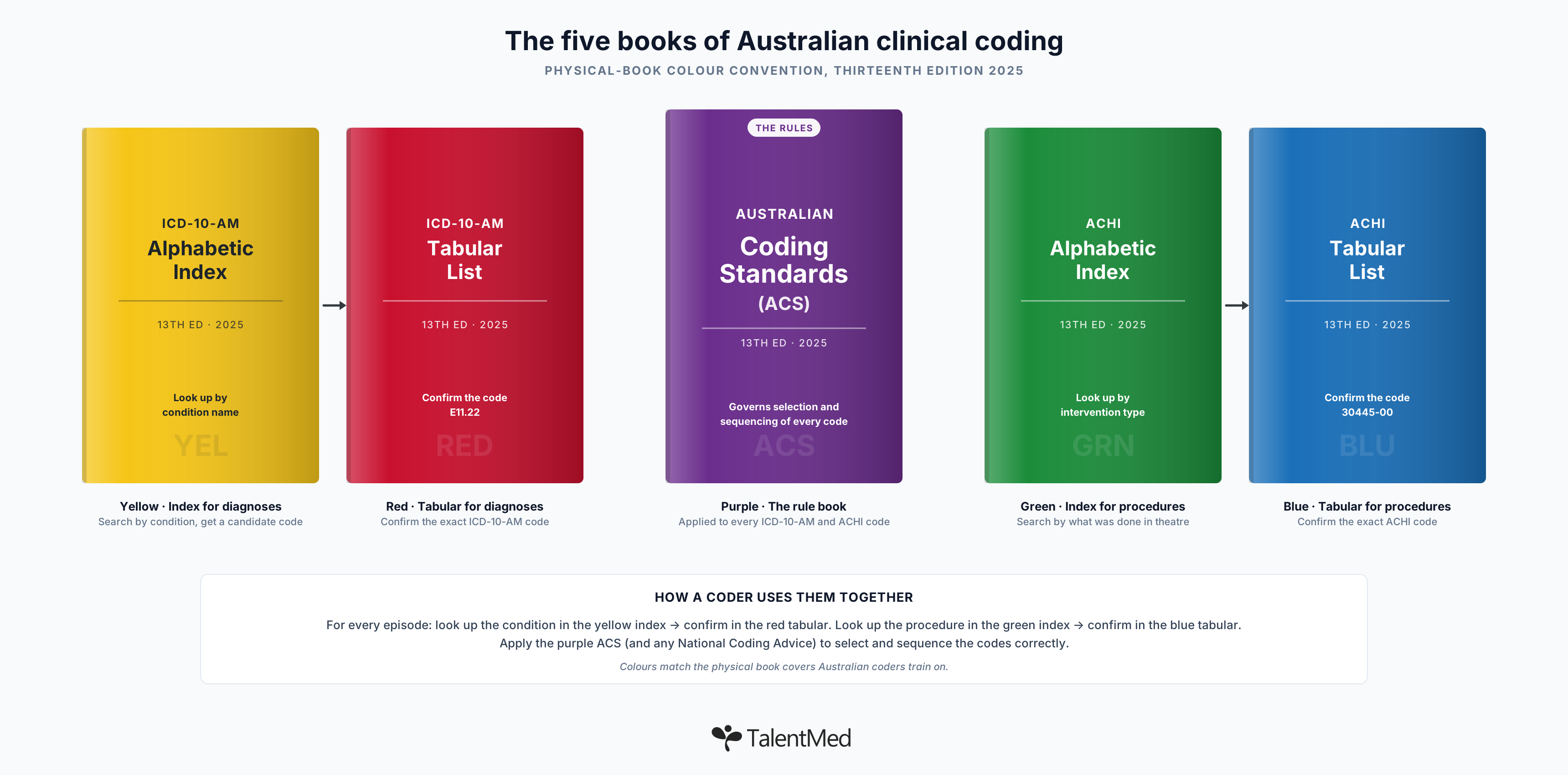
Every working clinical coder in Australia uses the same five reference publications, produced by the Independent Health and Aged Care Pricing Authority (IHACPA). These are the authoritative books for the ICD-10-AM 13th Edition, ACHI 13th Edition, and Australian Coding Standards 13th Edition, applicable for separations from 1 July 2025.
The publisher chain matters if you are reading older material. The classifications were originally published by the Australian Consortium for Classification Development (ACCD), then the Independent Hospital Pricing Authority (IHPA). IHPA was renamed IHACPA on 1 July 2022. Today, IHACPA is the single source of truth for all five books.
You will refer to these every day on the job. During study, your training provider will give you extracts and guided exercises that walk you through how each book works. Once you graduate, your employer provides the current edition as part of your workstation setup. Most learners buy their own copy only if they want to study ahead of their cohort.
The five-colour convention comes straight from the physical book covers. Learning the colour-code early makes the lookup process feel faster, because your eye reaches for the right book without you thinking about it.
Free online tools and practice resources
Several high-quality coding resources are free. Use them alongside your Diploma, not instead of it. They are designed to support practising coders and learners, and they reward repeat visits as new advice is published.
IHACPA National Coding Advice (NCA)
The NCA archive is the authoritative FAQ database for Australian clinical coding. IHACPA publishes coding rules and new-edition FAQs for each implemented edition of ICD-10-AM, ACHI, and the Australian Coding Standards. Bookmark the archive and check it whenever you hit an unusual scenario.
Clinical Coding Practice Framework
Published by IHACPA, the Practice Framework sets out the professional expectations for clinical coders working in Australia, covering ethics, quality, and workplace practice. It is short, readable, and useful context for anyone considering the profession.
TalentMed Clinical Coding Challenge
A free 10-minute interactive exercise that walks you through a realistic Australian hospital episode. You use the same lookup process a working coder uses, and you commit to an answer. No sign-up required. It is the fastest way to test whether the work feels natural before you enrol.
Past editions of ACS (read-only)
IHACPA retains earlier editions of the Australian Coding Standards on its ICD-10-AM/ACHI/ACS resources page. These are not the current rule book, but they are useful if you are auditing historical records or want to see how a standard evolved.
CCSA membership and community
The Clinical Coder’s Society of Australia (CCSA) is the professional body most Australian coders join after graduation. Membership gives you access to continuing professional development, peer networks, study groups, and conference events. It is the most useful non-qualification investment you can make in your coding career.
For learners, CCSA resources sit in the “after the Diploma” bucket. Most coders join once they start their first role or in the final stretch of their qualification, because the community and CPD material assume a working grasp of the classification. If you are still evaluating the career, your Diploma plus the free IHACPA resources are the right starting point.
Read our guide on CCSA membership and the clinical coders community for a full breakdown of benefits, cost, and CPD pathway.
Tips from experienced learners
The learners who finish the Diploma on time and land their first role fast tend to share a handful of study habits. None of these are secrets, but they are easy to miss when you are new to the craft.
A study stack that actually works
If you want a simple study stack that has produced working coders, it looks like this. Start with the HLT50321 Diploma for structure and assessment. Add the five IHACPA classification books, provided by your employer or purchased if you want them sooner. Bookmark the NCA archive for every unusual scenario. Use the Clinical Coding Practice Framework for professional context. Practise with the free Coding Challenge before and during the first weeks of study. Join CCSA once you are working or in the final months of the Diploma.
That stack is inexpensive, authoritative, and matches what actual hospitals expect of a new coder. Everything else, the podcasts, the social-media explainers, the unofficial cheat sheets, is optional and should never replace the primary references.
Related reading
Explore further
Frequently asked questions
Want to find out more?
Speak to a TalentMed course adviser about HLT50321.
12 months, 100% online, flexible payment plans, daily intakes year-round.