Clinical Coding in 2026: Why It Is One of Australia’s Most In-Demand Remote Careers
Post Author:
TalentMed
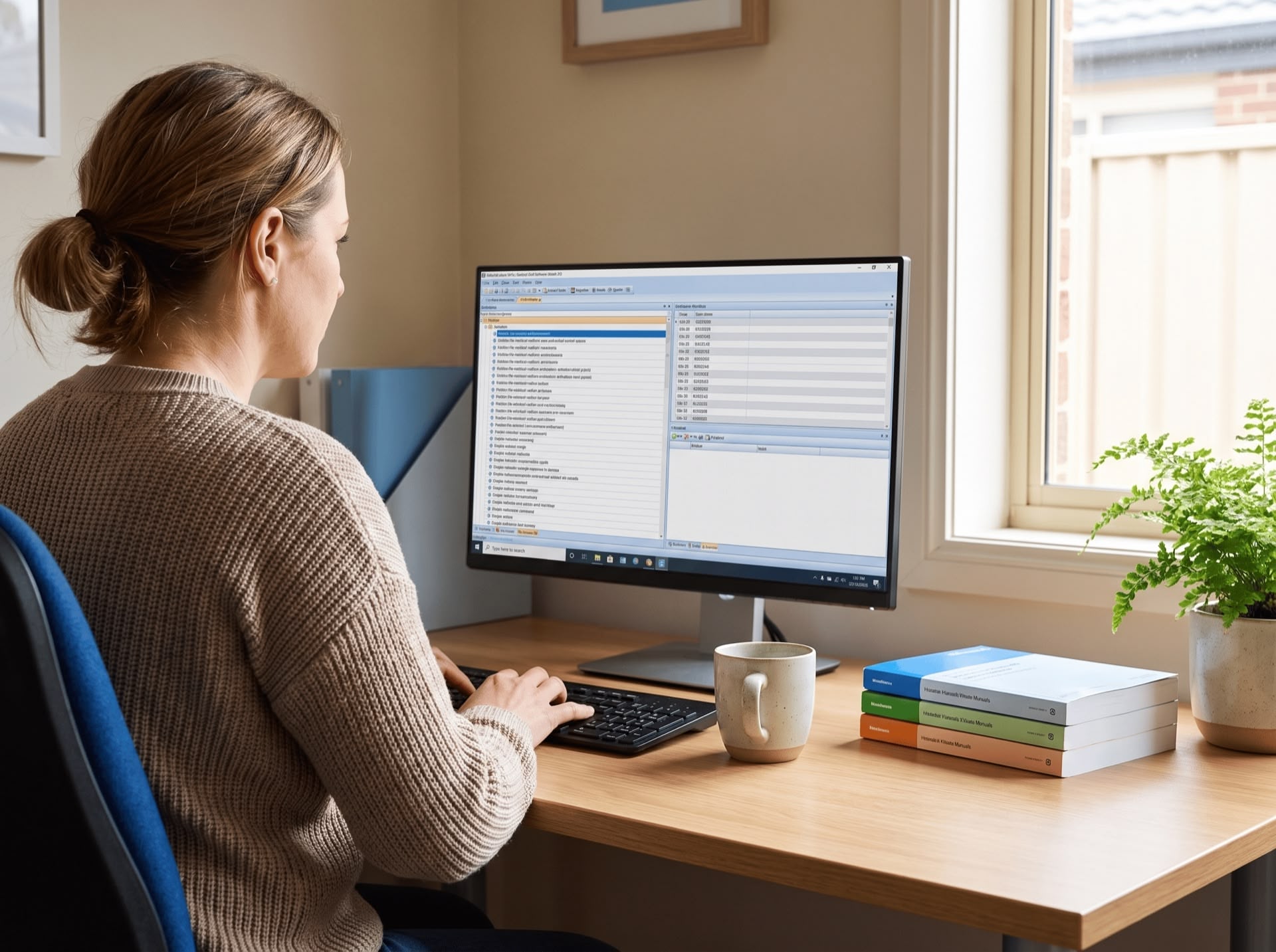
As one financial year ends and another begins, a lot of Australians take stock of where their working life is heading. If you want a role that is stable, pays professionally, and can be done from home, clinical coding is worth a serious look. Clinical coders turn the details of a hospital stay into the standardised codes that hospitals run on, and demand for that skill has stayed strong year after year.
This is a plain look at why the role keeps drawing people in, who is making the switch, and how to get started. For the full picture of the profession, our clinical coding career hub covers it end to end.
Why clinical coders stay in demand
The demand sits in the plumbing of how Australian hospitals are funded. Every public and private hospital that admits patients needs accurate coded data, because hospitals are paid in large part for what they actually treat. That funding runs through activity-based funding and the Australian Refined Diagnosis Related Group (AR-DRG) system, and coded data is what makes it work. If the coding is wrong or late, the hospital is not paid correctly. That is why coders are a permanent fixture, not a nice-to-have. Our guide to clinical coding and hospital funding explains the link in detail.
On top of that steady baseline, the workload keeps rising. An ageing population, more day surgery, and new procedure types all push up the number of admissions that need coding each year. At the same time, a good share of the existing workforce is heading toward retirement. The result is a profession where vacancies are common, especially in regional areas and private hospital groups, and where trained coders are sought after. Our overview of clinical coding jobs in Australia shows where the roles tend to sit.
A health career you can do from home
Clinical coding is one of the most remote-friendly roles in the whole health sector. The work is done at a computer with the patient record in front of you, so it does not need to happen on a ward. Many public health services, private hospital groups, and third-party coding providers employ coders to work from home, either fully remote or in a hybrid pattern.
That flexibility is a big part of the appeal. It suits parents returning to work, people in regional towns who do not want to relocate, and anyone who would rather skip the commute and keep more control over their day. The trade-off is that remote coding rewards discipline and accuracy, since you are trusted to get the detail right on your own. If a work-from-home health career is what you are after, our complete guide to remote clinical coding in Australia walks through how it works in practice.
Who is moving into clinical coding
You do not need to be a doctor or a nurse to become a clinical coder. The people who move into it come from all over: nurses and allied health staff looking for a less physical role, ward clerks and medical receptionists who already know the hospital environment, and career-changers from outside health who are good with detail and willing to learn the medical language. What the work really asks for is patience, precision, and comfort with reading clinical notes closely.
People often ask whether artificial intelligence will make the job redundant before they have finished training. It is a fair question, and the short version is that AI tools can suggest and assist, but accuracy, auditing, and funding integrity still rely on trained coders who can check the work and stand behind it. The role is evolving rather than disappearing. We cover this properly in will AI replace clinical coders in Australia, and our healthcare worker to clinical coder transition guide maps the switch for people already in the sector.
How to start as the new financial year begins
The standard entry point is a nationally recognised qualification. The HLT50321 Diploma of Clinical Coding teaches the classification systems Australian coders use, including ICD-10-AM, ACHI, and the Australian Coding Standards, building from the ground up so a medical background is not assumed. It is delivered 100% online and self-paced over 12 months, with daily intakes so you can begin any time rather than waiting for a semester to start.
Once you are qualified, joining a professional body such as the Clinical Coders’ Society of Australia (CCSA) connects you to ongoing development and a network of working coders. Our guide on how to become a clinical coder sets out the full pathway, and the CCSA membership guide explains why it matters. To see the units, current fees, and flexible payment options, explore the HLT50321 Diploma of Clinical Coding. A new financial year is as good a time as any to start.
Frequently asked questions
TalentMed Pty Ltd is a registered training organisation, RTO 22151. This article is general information, not career advice.
HLT50321
Diploma of Clinical Coding
100% online and self-paced over 12 months. Start any time.
Prefer to talk it through?
Book a free, no-obligation call with a TalentMed course adviser about the Diploma of Clinical Coding.
More for clinical coders
Clinical coding career news
Monthly insights on clinical coding, course updates, and industry trends.