Trainee Clinical Coder: How to Break In With No Experience
Post Author:
TalentMed

Getting started
Trainee Clinical Coder: How to Break In With No Experience
Most people searching “trainee clinical coder” are hoping to be hired and trained on the job, no study required. The reality in Australia is different. True on-the-job coding traineeships, where an employer pays you to learn from scratch, are rare in Australia and getting rarer. Since 2023, the HLT50321 Diploma of Clinical Coding has been the recognised entry standard, and new coders are reviewed against the national standards from their first week. The good news: you can absolutely enter this field with no experience. This guide explains the realistic route in, and what a “trainee coder” role actually looks like once you are hired.
New to the profession? Our guide to clinical coding in Australia explains what coders do, where they work and how the qualification fits.
What people mean by “trainee clinical coder”
The phrase usually means one of two different things, and the difference matters:
- The hope: a job where an employer hires you with no experience and no qualification, then teaches you coding on the job and pays you while you learn.
- The reality: a “Coder Trainee” or “Junior Coder” role you step into after completing the Diploma, where you code real records under supervision while you build speed.
Both are real, but the first is uncommon and the second is the normal way in. Understanding why changes how you approach getting hired.
Do on-the-job coding traineeships exist in Australia?
They do exist, but they are scarce, and the trend is away from them. A few large public health services and the occasional private operator still run cadetships or earn-while-you-learn programmes, usually advertised rarely and filled quickly. For most people, waiting for one of those is a slow way in.
Three things explain why employers prefer the qualification first:
- Coders are audited from day one. Every state runs a coding audit programme (the NSW Coding Audit Program and Victorian ICD Coding Audits, for example) and every hospital coding department reviews work internally. Employers need new coders who already understand the Australian Coding Standards, not people starting from zero.
- The Diploma became the standard in 2023. The HLT50321 Diploma of Clinical Coding is now the recognised education benchmark for the role, so it is what job ads ask for.
- Coding accuracy moves money. Codes drive hospital funding through Activity-Based Funding. A miscoded record has real financial and reporting consequences, so employers are cautious about untrained hires.
The realistic route in with no experience
This is the path most coders actually take. None of these steps require prior healthcare experience.
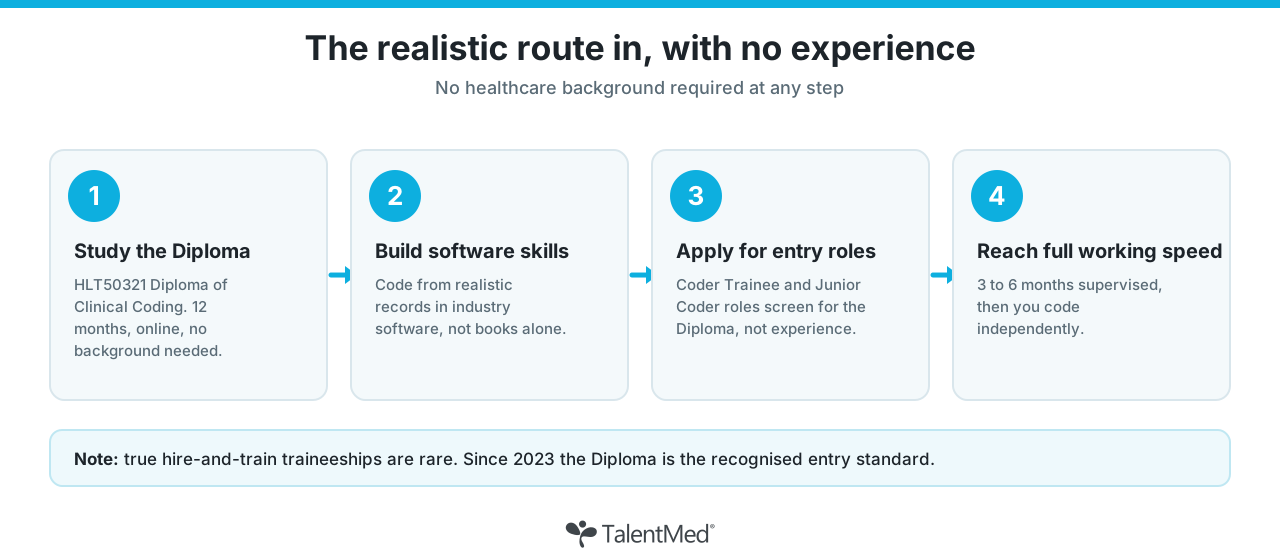
- Study the HLT50321 Diploma of Clinical Coding. No medical background required. It teaches terminology, anatomy, the classifications (ICD-10-AM, ACHI, ACS), and how to apply the standards. This is the part that replaces “experience” in an employer’s eyes.
- Build software familiarity. Coding from realistic records inside industry software during study means you arrive job-ready, not book-only.
- Apply for Coder Trainee and Junior Coder roles. These are the entry titles. They expect the Diploma and a willingness to be supervised, not years of experience.
- Reach full working speed under supervision. Most new coders take 3 to 6 months of supervised coding to reach the throughput hospitals expect. That supervised period is the real “traineeship”, and it happens on the payroll.
For the full step-by-step version, see our guide on how to become a clinical coder in Australia. For where the jobs are advertised and how to apply, see clinical coding jobs in Australia.
What a “Coder Trainee” role actually looks like
Once you are hired into an entry role, the trainee phase is supervised, not solo. Expect:
- Supervised coding. A senior coder or coding auditor reviews your work and gives feedback against the standards.
- A gradual lift in volume. You start with straightforward admissions and build toward more complex records as your accuracy holds up.
- Real audit feedback. Your coding is checked the same way every coder’s is, which is how you improve quickly.
This phase is the entry rung of a clear career ladder. Where it leads (experienced coder, auditor, educator, coding manager) is mapped in our clinical coder career pathway guide.
How to make yourself hireable with no experience
If you are competing for an entry role without a coding work history, these are the levers that matter:
- The qualification, named correctly. Lead your application with “HLT50321 Diploma of Clinical Coding”, because that is the phrase employers screen for.
- Hands-on software. Solventum Codefinder (formerly 3M Codefinder) is the tool most coders use. Being able to say you have coded inside it, not just read about it, sets you apart from book-only applicants.
- Evidence you can code accurately. Assessment from realistic records during your course is the closest thing to a work sample you can show.
- Transferable strengths. If you are coming from nursing, allied health, or medical administration, name the relevant strengths. Our healthcare-to-coding transition guide covers what carries over.
Not sure coding suits you before you commit to study? Try the free Clinical Coding Challenge. Ten real scenarios show you what the work feels like.
Frequently asked questions
On this page
HLT50321
Diploma of Clinical Coding
- 12 months. 100% online. Self-paced.
- Daily intakes 365 days a year
- Solventum Codefinder optional add-on
- Australia’s best-value Diploma
Talk to a course adviser
Book a 15-minute call
Get answers to your specific situation. No pressure, no sales pitch.
Try the work
Free Clinical Coding Challenge
10 real coding scenarios. See how clinical coding actually works before you commit to the course.
Healthcare career news
Subscribe for monthly insights on clinical coding, course updates, and industry trends.